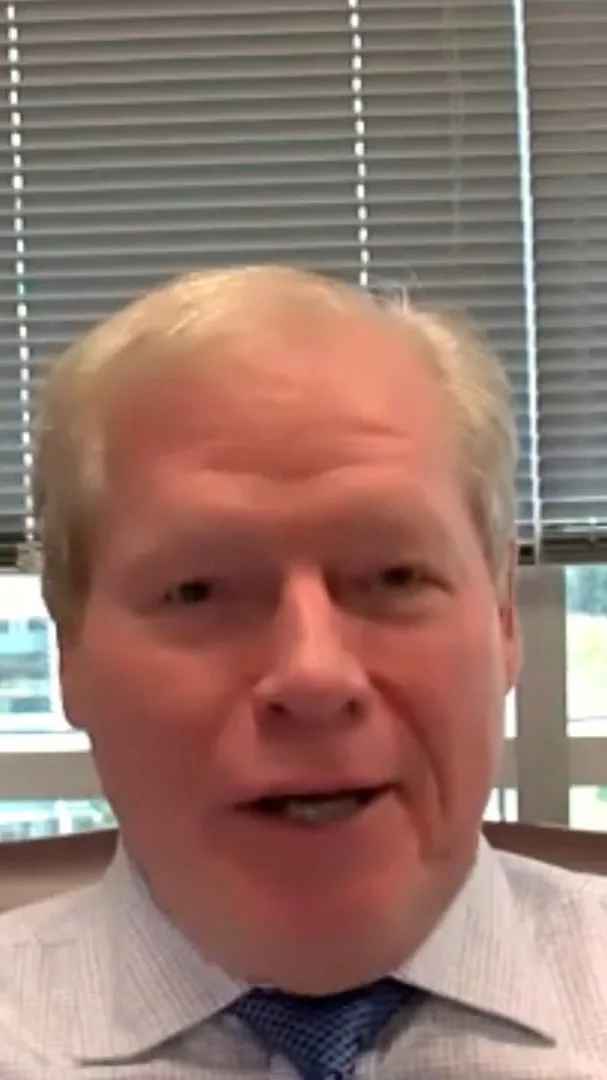
Guest: Charles O. Frazier, MD, Senior Vice President & Chief Medical Information and Innovation Officer, Riverside Health
Host: Praveen Chandran
Introduction and Clinical Leadership Background
Praveen Chandran
Hi everyone, and welcome to another episode of The RC Executive Lounge podcast series. I’m your host, Praveen. In today’s episode, we’re tackling some of the biggest challenges and opportunities in revenue cycle management with someone who has been deeply involved in leading teams, driving change, and delivering impact.
I’m excited to welcome Charles O. Frazier, Senior Vice President and Chief Medical Information and Innovation Officer at Riverside Health, an integrated health system in Eastern Virginia.
Dr. Frazier received his BA and MD from the University of Virginia and completed his family medicine training with the United States Navy. He joined Riverside’s Family Medicine Residency Faculty in 1994 and is a clinical professor in the Virginia Commonwealth University Department of Family Medicine and Population Health.
He has led Riverside’s electronic health record initiatives since the system implemented its first EMR in 1996. He is a past president and current board member of the Virginia Academy of Family Physicians and has worked extensively on state-level quality and informatics initiatives, including service on the Virginia Task Force on Primary Care.
Charles, welcome to the show. Thank you so much for joining us today.
Charles Frazier
Thank you, Praveen. Glad to be here. I really appreciate it.
Strategic Priorities in Healthcare Innovation and Revenue Cycle Alignment
Praveen Chandran
With so many pressures on finance and revenue cycle teams today, from payer delays to staffing gaps, how do you think about setting strategic priorities for the next three to five years versus the next twelve months?
Charles Frazier
My perspective may be a little different than some of your listeners because I’m not a CFO. I’m a clinician. That said, I’m also an officer of the organization, and I believe strongly in the idea that there is no mission without margin.
It’s important for us to make decisions in a fiscally responsible way while also improving health outcomes. I look for opportunities where we can improve clinical care and outcomes while also making a sound business decision.
Another major priority for me is improving the experience for clinicians, particularly physicians and advanced practice providers. If we can find something that improves community health, supports clinicians, and makes good business sense, that’s a high-priority initiative for us.
Praveen Chandran
That clinical lens combined with financial partnership is exactly what our audience values. Innovation leaders have to balance both worlds.
Every organization faces tough choices, especially when innovation ideas are coming from every direction. Can you share an example where you had to say no to a good initiative in favor of something more critical?
Evaluating Innovation and Saying No to Low-Value Projects
Charles Frazier
That happens all the time. It’s interesting because I’ve had the word “innovation” in my title for many years, but sometimes I feel like I’m the anti-innovation person.
We are an Epic organization, and we started our Epic implementation about ten years ago. One of the first questions we ask when someone brings a new solution to us is whether Epic already offers that functionality or has it on the roadmap. We’re already paying for it, so if it’s integrated, that often makes more sense.
We frequently say no to third-party solutions because Epic can do something similar, or soon will. There are also situations where we simply can’t make a strong business case.
For example, there are many FDA-approved AI tools in radiology. Some of them are excellent, but they can cost hundreds of thousands of dollars. If there’s no clear return on investment, it’s hard to justify dedicating resources to that, even if it’s a good idea.
We do try to keep innovating, but it’s always a balance.
Denial Prevention as an Organizational Priority
Praveen Chandran
At RCM conferences, denial prevention is always top of mind. We often hear that denials aren’t just an RCM issue but an organizational one.
How does denial prevention factor into your innovation priorities?
Charles Frazier
It’s very high on our list. A major driver of financial pressure is that payers delay and deny payment. That’s just the reality of the system.
We also know that payers are increasingly using AI to make those processes more efficient on their side. That means we have to respond earlier in the process, especially at the documentation and coding levels.
We’re focused on helping clinicians get specificity right at the point of care. For example, diagnosis codes for cancer treatments or infusions have to be extremely specific. If they aren’t, the claim will be denied.
From a clinical perspective, that can feel frustrating because the treatment is clearly appropriate. But if we don’t address this upfront, the cost and effort of resubmitting claims is significant.
We also deal with denials related to inpatient versus observation status, prior authorization for medications, and constantly changing payer formularies. All of this creates waste in time, effort, and money just to get paid for the care we provide.
That’s why denial prevention is a core strategic priority.
Ambient AI and the Challenge of Clinical Documentation Burden
Praveen Chandran
Let’s shift to a specific initiative you led that has had a major impact. What challenge were you trying to solve?
Charles Frazier
This is one of the most satisfying initiatives I’ve worked on in nearly thirty years of medical informatics. The project focused on ambient artificial intelligence, or ambient AI documentation.
The core challenge was documentation burden. Over time, documentation requirements expanded dramatically. Notes became more complex, driven by payment rules, quality reporting, and compliance needs.
That burden took a toll on clinicians and patients. Providers spent more time interacting with computers than with patients. Patients noticed and complained about it.
We wanted to address at least that one major issue. If we could make documentation easier and restore focus on the patient, that would be meaningful progress.
Selecting and Implementing an Ambient AI Solution
Praveen Chandran
How did you evaluate vendors and decide on the right solution?
Charles Frazier
First and foremost, it had to work. I first heard about ambient documentation around 2018, but early solutions didn’t actually generate clinical notes. They functioned more like digital assistants.
As generative AI matured, multiple vendors began offering solutions that truly worked. At that point, differentiation came down to integration.
Having worked in informatics for decades, I can say without hesitation that deep integration with the electronic health record and clinical workflow is critical to success.
We narrowed it down to two vendors that were highly integrated with Epic. Both worked well, and providers liked them. Ultimately, we chose Abridge because we trusted the leadership team and liked that their language model was trained specifically on medical documentation.
Implementation Experience and Governance Considerations
Praveen Chandran
Were there any surprises or pitfalls during implementation?
Charles Frazier
We had to develop policies as we went, particularly around patient consent. We decided that consent was required, and providers had to review every note generated by the system.
We also set usage expectations since we were investing in the platform. Overall, the implementation went remarkably well.
We had minor technical issues related to updates or network changes, and we strengthened Wi-Fi in some practices. Out of hundreds of thousands of notes, we had only a handful of patient complaints related to consent, which helped us refine our process.
Measurable Outcomes from Ambient AI Adoption
Praveen Chandran
What measurable impact did you see after implementation?
Charles Frazier
The results were extremely positive. We piloted the tool with thirty providers and measured burnout before and after. Initially, sixty-one percent reported some level of burnout. After thirty days, that dropped to under twenty-eight percent.
We saw a fifteen percent reduction in time spent on documentation, a seventeen percent reduction per encounter, and a seven percent decrease in after-hours “pajama time.”
Patient experience scores improved by three percentage points, which is significant given how high they already were. Documentation became more complete, leading to a fifteen percent increase in diagnoses captured per encounter and a fourteen percent increase in risk adjustment diagnoses.
We also saw improvements in visit levels and work RVUs, resulting in net revenue increases that delivered a strong return on investment. Provider volume increased by nearly eight percent among established clinicians.
Providers described the tool as game-changing and life-changing. Patients noticed that clinicians were more present. The outcomes exceeded our expectations.
Agentic AI and the Future of Healthcare Operations
Praveen Chandran
How do you see agentic AI fitting into healthcare and revenue cycle operations?
Charles Frazier
I think agentic AI will become increasingly important as it improves. Today, there are still moments where people prefer to speak to a human, but that will continue to evolve.
We’re exploring AI agents for scheduling, call centers, and patient billing inquiries. For example, voice-based AI could help reduce call abandonment and wait times, with warm handoffs to human staff when needed.
We’re also looking at text-based agents in patient portals to answer billing questions. These solutions need to be risk-based, short-term, and flexible, with clear exit options.
Beyond revenue cycle, we’re excited about AI in radiology and screening, such as automated diabetic retinopathy detection in primary care offices. These tools improve access, efficiency, and value-based care performance.
Longer term, I’m most excited about AI that combines ambient documentation with clinical decision support, evidence-based guidance, and coding assistance, while still relying on clinician judgment to balance risks and benefits.
Leadership, Change Management, and Organizational Communication
Praveen Chandran
Change management is difficult at this scale. How did you manage it?
Charles Frazier
One challenge has been managing the sheer volume of AI-related information and vendor outreach. To address this, I started writing a weekly internal AI blog to communicate what we’re working on, which use cases are approved, and how we’re governing risk.
This transparency helped reduce confusion and cut down on incoming requests. It also allowed us to clearly communicate our governance framework and priorities.
Leadership Advice for Healthcare Executives
Praveen Chandran
If you could offer one piece of advice to another healthcare executive, what would it be?
Charles Frazier
The first question you need to answer is what kind of organization you want to be. Do you want to be on the bleeding edge, or do you want to be more conservative?
For us, the right place is in the middle. We leverage what our EHR vendor already offers and carefully evaluate third-party solutions where there’s a strong business case.
Once you answer that question, your strategy for implementing AI and innovation becomes much clearer.
Praveen Chandran
Charles, thank you for sharing such thoughtful and practical insights. This has been a fantastic conversation.
Charles Frazier
Thank you very much for having me. I really appreciate it.