
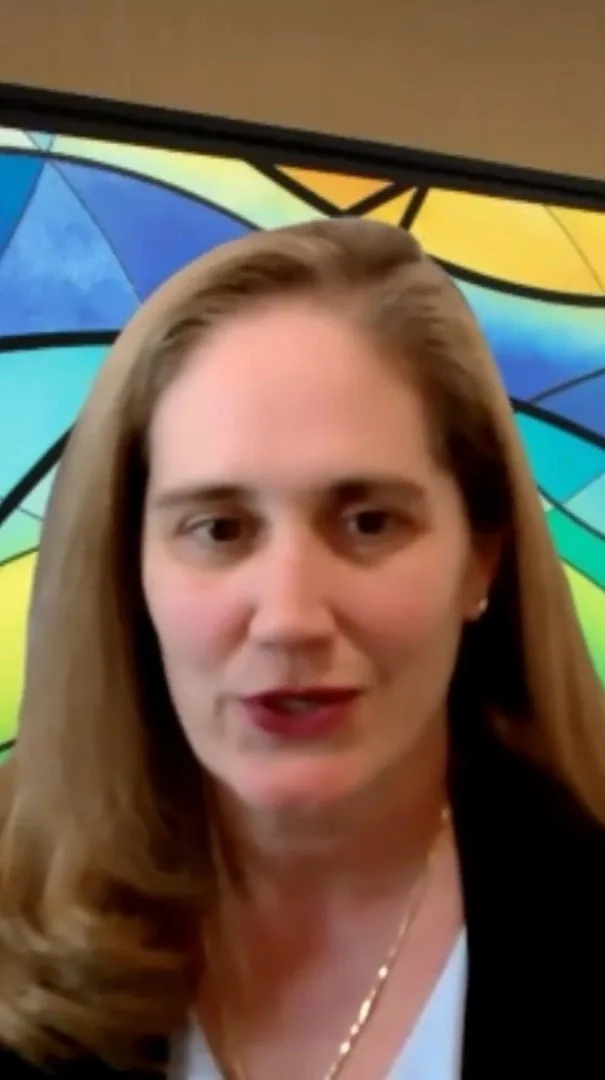


Guest: Kimberly Scaccia, Vice President of Revenue Cycle, TriHealth
Host: Praveen Chandran
Introduction and Revenue Cycle Leadership Background
Praveen Chandran You're listening to The RC Executive Lounge podcast, the show where healthcare revenue leaders share real-world strategies, hard-earned lessons, and bold ideas shaping the future of revenue cycle.
Hi everyone, and welcome to another episode of The RC Executive Lounge podcast series. I'm your host, Praveen, and I'm very excited that you're all joining us today. I have a guest with whom I've been looking forward to having this conversation for quite a while now.
Today, it's my pleasure to welcome Kimberly Scaccia, Vice President of Revenue Cycle at TriHealth, to the RC Executive Lounge. Kim is a highly respected revenue cycle leader with a rare blend of hands-on operational leadership and deep management consulting experience. Across her career, she has consistently helped health systems elevate financial performance while building strong, engaged teams and sustainable operating models.
Prior to joining TriHealth, Kim held a senior leadership role at Mercyhealth, where she assumed full ownership of the end-to-end revenue cycle across a vertically integrated, multi-hospital, multi-practice health system. Under her leadership, the team achieved significant improvements, including major reductions in AR days and denials, record-setting cash collections, and improved staff engagement, all while navigating the operational complexity of the COVID era and a shift to hybrid work.
Earlier in her career, Kim served in leadership roles at KPMG and Baker Tilly, where she partnered with healthcare executives across the country to redesign revenue cycle operations, strengthen analytics and performance management, and drive large-scale transformation initiatives. That consulting foundation continues to shape her approach today, combining data-driven decision-making with practical execution.
Kim is also deeply engaged in the broader healthcare finance community. She served from 2023 to 2025 on the HFMA National Advisory Council and is currently a member of the Ohio Chapter of HFMA, where she brings a strong perspective on payer relations, revenue integrity, and change leadership in an increasingly complex environment.
We are very excited to have Kim join us today to share her insights on leading revenue cycle through change, building high-performing teams, and using analytics and partnerships to drive meaningful, lasting results. Kim, thank you so much for being here today and welcome to the RC Executive Lounge.
Kimberly Scaccia Thanks, Praveen. I'm very, very honored to be here. And I know we've been in conversations for a while, so I am even more excited that we were able to make this work.
Praveen Chandran I'm so glad we finally were able to make this work. I know it's been a challenge to get our calendars in sync. Leaders are always super busy, and we have to make sure the calendars line up. I'm glad they did. With that, let's dive in.
Setting Strategic Priorities Under Constant Pressure
Praveen Chandran With so many pressures on finance and RCM teams today, from payer delays to staffing shortages to the regulatory environment, how do you go about setting your top strategic priorities when you think ahead for the next 12 months, the next 3 years, and the next 5 years?
Kimberly Scaccia Well, honestly, with the amount of pressure on finance and revenue cycle teams right now, I found that the only way to set meaningful priorities is to stay very disciplined and grounded in impact. First, anchor everything to enterprise risk and value. What most directly protects revenue, cash flow, and patient trust? Payer delays, denials, and staffing gaps all show up differently across the organization, so we focus on the few pressure points where improvements will move the needle, whether it's financial clearance, denial prevention, or reducing avoidable write-offs.
Second, I'm very intentional about sequencing, not just selecting priorities. In today's environment, you can't do everything at once. We prioritize initiatives that strengthen the foundation, the core workflows, accountability, and data transparency, because without those in place, even high-ROI projects struggle to scale and sustain.
Third, capacity matters just as much as strategy. Staffing gaps force us to make hard choices. We evaluate priorities through a "do more with less" lens. Can this be automated? Can it be standardized? Is the work aligned to the right role? Where are we burning out highly skilled staff on manual, low-value tasks? If an initiative increases complexity without relieving pressure on the teams, it's usually a no, or at least a not now.
We also have to balance ROI with the regulatory and compliance reality. Some initiatives are simply non-negotiable. When it comes to strategic priorities, compliance and regulatory requirements will sometimes trump everything else.
But really, at the top of everything we do strategically: relentless focus and clear communication. Once the priorities are set, we have to be explicit about what we are not working on. Clarity builds trust with teams and keeps leadership aligned, especially when conditions change, which they do every day in finance and revenue cycle. At the end of the day, strategic priorities are about protecting revenue, supporting our people, and ensuring we're positioned to adapt and excel, not just survive.
Making Hard Tradeoffs and Saying No to Good Ideas
Praveen Chandran When you're prioritizing this way in a complex RCM environment, your team members are going to bring 20 to 50 initiatives every year during prioritization. As a leader, you're often put in a situation to make some really tough choices. Can you share an example where you had to say no to a really good initiative, even though you really wanted to do it, but because of time or bandwidth constraints you had to say no in favor of something even more critical?
Kimberly Scaccia Absolutely, and it's happening right now. Very simply: pricing transparency. The new rules and regulations around what we have to do from a transparency perspective have been building for a long time. But with government regulations the way they are in healthcare, we just have to prioritize some of those things. The machine-readable formats published on websites provide little or no ROI for us. They help government. They help payers test and review reimbursement markets. And unfortunately, with the new regulations, this particular project for transparency this year has had to bump some other priorities into the fall, and that's really the nature of the beast sometimes.
Praveen Chandran Regulatory projects also have a fixed timeline associated with them, so you're put in a situation where you have to address them. That totally makes sense.
Denial Prevention, Patient Financing, and Financial Assistance Strategy
Praveen Chandran When we go to events, be it HFMA, MGMA, or elsewhere, there are two or three topics that keep coming back: denial prevention, patient financing, and financial assistance. Where do these fit in your strategic roadmap, in your current organization or a previous one?
Kimberly Scaccia All three are high priorities for us this year. Patient financing, in my opinion, is one of the most challenging areas on the roadmap. Recourse programs are becoming more common across the industry, but in my experience, they often come with a significant cost to patient trust and satisfaction. In fact, here at TriHealth we recently exited a recourse program altogether because of not only the dissatisfaction but the operational challenges it created. When you remove a recourse program as an option, the alternatives aren't easy. You're left balancing external early-out vendors, traditional collections, internal staffing, or, at the very far end, legal action against patients, which is both unpopular and misaligned with patient-centered care.
Layer on top of that the evolving regulatory environment, particularly guidance around consumer financial protections in healthcare debt, and it becomes clear that there is no simple solution to patient financing. Our focus has to be thoughtful and compliant, aligned with both our financial stewardship and our patient experience. On the patient financing front, it's all about education and upfront communication, helping patients understand that for insured patients, the amount they pay is set by their payer.
And that's a nice transition into denial prevention. I believe we can change the game. I believe that we in revenue cycle can fundamentally change the game in denial prevention. I describe denials as the noise. Denials are typically a symptom of one of two things: a broken revenue cycle process or payer behaviors that result in delays. Too often, organizations stay stuck in a reactive posture, chasing denials after the fact. Our strategy over the next 18 months is to shift upstream, fix the root cause issues, partner more closely with managed care to improve contracts and service level expectations, and, of course, leverage AI, not just to work denials faster, but to be more predictive, to identify the denials before they happen rather than building large teams to clean them up afterward.
Praveen Chandran Let's take a short break. When we come back, we are going to be talking to Kim about an initiative her organization led, what the impact was, and what challenges they were solving for. Please stay tuned.
Autonomous Coding Initiative: Vendor Selection and Implementation
Praveen Chandran Welcome back, Kim. Let's dive right in. I'd love to dive into a recent initiative that you and your organization led. What challenges were you solving for?
Kimberly Scaccia I'm going to talk about my prior organization at Mercyhealth, because at TriHealth we have so many things going on and we're still in mid-flight with a lot of them. At Mercyhealth, when we came to the understanding that we needed automation and assistance in our physician coding space, we decided to go with an autonomous and computer-assisted coding solution. This is very scary for a lot of organizations, and especially for a lot of coders, because people think that technology means lost jobs. But what a lot of folks don't realize is that AI is here to help us move our team members to operate at the top of their skill set.
That's literally what we saw. We brought in an autonomous and assisted coding application, and the problem we were solving was that we weren't touching every single charge as it went out. A physician would see the patient, drop the code, the claim would go out, and then we'd be in constant cleanup. By putting in an autonomous solution, it could do the checking, allow claims to go out, and identify what was missing.
Praveen Chandran Especially for organizations where data is at scale, AI can do a great job. Now, when you identified the challenge, how did you go about selecting a solution or a partner? There's the classic conflict of build versus buy. How did you navigate that?
Kimberly Scaccia We didn't do a formal RFP, although a lot of organizations do. We started by doing our own research. I was very fortunate at my last organization to have a director who could see the writing on the wall and really understood where we were going. She was able to work with her management team, go out, and talk to other organizations about what they were doing and what worked well, and then we started doing demonstration reviews. It really came down to putting down on paper the pros and cons of each partner or solution we talked to. What did they do well? What didn't they do well? And we looked at that from the perspective of what are we going to gain and will we solve the problem, before we looked at cost. When it comes down to it, most vendors are going to be pretty comparable in price. Our winning vendor just blew everyone else out of the water from a true solution perspective. We were looking for a solution that would solve some real problems and grow with us as we continued down that path.
Praveen Chandran That makes sense. Let's talk about implementation. A project of this scale will have known and unknown complexities. As you and your team went through implementation, were there any pitfalls, surprises, or lessons you learned along the way?
Kimberly Scaccia I don't want to say there were real pitfalls. In a project of this size, I don't think any of us anticipated the workload that was going to fall on our existing staff. Because it was somewhat unknown what we were taking on, we did take it in bites. What's the old saying? You can't eat the apple all in one bite. And that was definitely true here. One of the surprises was really trying to understand how we were going to break it down. It was a challenge in the beginning, but once we got through that piece of it, we were able to move a lot quicker.
My team did an absolutely fantastic job of being able to raise the yellow flag, of saying, "Hey, we need to take a timeout and think about whether we're going about this the right way." And when you think about taking on a big project, if you haven't created a psychologically safe organization, your teams won't feel like they have that voice. And that's really important.
Autonomous Coding Results and the Shift to Higher-Value Work
Praveen Chandran It sounds like two key aspects were having a psychologically safe organization and strong project management. Could you share the measurable impact from this project, and in general, for a project of this scale, how do you think about tracking success?
Kimberly Scaccia That goes back to your earlier question about how we find a solution partner. If you're not thinking about how to measure success while you're looking for a partner, you're going to be late in the game. That was one of the things we started thinking about as we were trying to solve the problem: can the partner give us a solution where we can track success, can we create the KPIs, and do we have a baseline to measure against? That was really important for us as we went through our solutioning.
When I left my last organization, they had already seen a 5 percent bottom-line impact, meaning net cash to the bottom line. And they had already seen their HCC capture rate go up about 6 to 7 percent. As you think about measurable impact, those are impressive numbers.
As a byproduct, we also saw physician satisfaction going up because now they had more real-time information coming back on a continuous basis. This is a great example of how technology can truly help an organization do more with less. We were moving coders from the task of coding claims to learning more about how to improve documentation, because we now had autonomous coding handling those transactional steps. That's AI helping teams operate at the top of their skill set.
Praveen Chandran Very impressive numbers. Let's take a short break. When we come back, we're going to be talking to Kim about upcoming technologies like agentic AI and their applications in revenue cycle and broader healthcare. Please stay tuned.
Agentic AI and Its Role in Revenue Cycle Operations
Praveen Chandran Welcome back. Kim, I want to shift gears into technology. You hear agentic AI so much at every event. As a leader of your caliber, how do you see agentic AI playing a role in revenue cycle when you look at the next 12 months as well as the next 3 to 5 years?
Kimberly Scaccia This one is always a fun topic. In healthcare, there are few areas that can be truly agentic, or fully autonomous. Most of what we want to do is a blend of generative, creating context, and agentic, doing the work. Take Epic's medical necessity denial functionality as an example. Is it AI? Sure. It's looking at a denial received from the payer and reading the medical record to create the appeal. But that AI still needs to be reviewed by an agent. Does it speed up their job? Absolutely.
On the coding front, as we think about ambient listening, those tools could be considered AI doing work previously required by a physician or a clinician. But as you think about where AI plays that role, you always have to remember that only a human can do what no human has done before. The true role of AI is vast. The challenge we have today is defining not only the best ROI, but having very clear guardrails around where we use it and how we use it. Our employees will be asked to work at the top of their skill set and even learn new ways to provide value.
Right now for us, clinical documentation improvement is a huge area. We're moving coders who used to handle the task of coding claims to learning more about how to improve the documentation, because we now have autonomous coding. We're ensuring that we're paid appropriately by capturing more and increasing the documentation to show the complexity of the patients we serve. It's a complicated balance, but I think we're going to see a faster scale and scope of agentic AI in the next 3 to 5 years.
Praveen Chandran You mentioned there are vast areas of application for agentic AI. Are there specific use cases where agentic AI is not just doing incremental improvements but truly a 10x transformation, a fundamental shift for either RCM or broader healthcare?
Kimberly Scaccia I think so. Proactive revenue protection versus reactive cleanup. I mentioned that earlier. Revenue cycle is still built around chasing problems after they happen: denials, underpayments, missed authorizations, documentation gaps, and that's reflected in how much effort we still put into backend remediation. Where I think AI can shift the game is by identifying documentation gaps before they happen or flagging payer-specific behaviors before they result in denials. Prioritizing work dynamically, identifying dollars at risk, not static work queues. That's where I think AI can help us prevent revenue loss instead of just accelerating rework.
Technology Watch List and the Metrics That Drive Performance
Praveen Chandran Outside of agentic AI, are there other technologies that you and your team are watching specifically for RCM or broader healthcare?
Kimberly Scaccia It's always interesting to try not to chase the shiny new AI feature. It's a lot about how those technologies actually show up in the work. I hear a lot in the market about whether it's truly agentic, whether we're talking about real automation or just work reprioritization, and that makes it really difficult in my current role. My highest priority right now is truly thinking about revenue integrity and watching the technologies that could support automated charge reconciliation: AI-assisted identification of missing or inconsistent charges, better integration across departments, looking at HIM, CDI, and clinical teams to catch potential opportunities earlier. At the end of the day, it's not just about the next single tool, but the convergence of AI, analytics, and workflow embedded directly into your EMR so that it's integrated and continuously helping your team members.
Praveen Chandran Is there one metric that you obsess over every morning or every week? The first thing you look at, and if those numbers go down, people start getting nervous in the organization?
Kimberly Scaccia The one metric for me is always cash. Cash is king. Cash rules the day. We look at cash every day, and it is your indicator of the health of everything.
Revenue cycle is always really challenging because you can't just measure one KPI. If you were to peel the layers of the onion one more level down, there are a few level-two metrics that immediately come to mind. I look at my cost to collect. If I'm collecting more but my cost is going up, am I being a good steward of my financial resources? And I strongly believe in looking at write-off percentage over denial rate. Everybody talks about denial percentage, but I personally prefer write-off percentage because that is, to me, a better indicator of how we're ultimately doing.
Praveen Chandran With that, let's take a short break. When we come back, we are going to be talking to Kim about her leadership philosophy and how she approaches change management. Please stay tuned.
Change Management and Building Momentum Through Change
Praveen Chandran Welcome back. Kim, change is really hard, especially in complex RCM environments. When you are building momentum for change for complex projects across teams, especially when it requires multiple cross-functional teams, how do you think about change management and building momentum?
Kimberly Scaccia This is one of my favorite topics. For me, momentum comes from clarity, credibility, and connection. You have to work all three at the same time.
I always start, and especially here at TriHealth, with a unified leadership voice. Change stalls when teams hear different messages from different leaders. We've been very intentional about aligning leaders so they know what we're changing, why it matters, and what success looks like. We even have a document we call a "know-share-do" framework, so that when leaders are consistent, teams feel safer leaning into change instead of questioning it.
Second, I focus on wins that matter to the frontline. Early progress builds belief. Fixing high-friction issues, whether it's a broken workflow, unclear expectations, or a reporting gap, shows teams that change isn't theoretical. It makes their work easier and proves leadership is listening. Those early wins create pull for the next phase of change.
Third, I overcommunicate the why, not just the what. People in general don't resist change, they resist uncertainty. We use multiple channels: expanded leadership meetings, department huddles, newsletters, and town halls to explain what's happening, how it connects to patient care and financial stewardship, and what it means to each role across the organization. Transparency builds trust and trust fuels momentum.
I also invest in managers and supervisors as change leaders. Frontline leaders are the difference between compliance and commitment. We equip them with talking points, data, forums, and slides so that their teams can raise concerns, and those frontline leaders can confidently lead their teams through the change, not just be messengers.
And lastly, for momentum to continue, I recognize progress publicly and often. When people feel recognized, they feel supercharged. Making sure to take those opportunities to say thank you and to acknowledge the person behind the work. At the end of the day, when people understand and trust their leadership, they walk alongside leadership through the change.
Praveen Chandran Lots of powerful lessons in change management. Thank you, Kim.
Leadership Advice, Book Recommendation, and Closing Reflections
Praveen Chandran If there is one piece of advice you could give to another RCM leader or a CFO who's tackling similar challenges, what would it be?
Kimberly Scaccia Use your resources. And by that I don't mean just your internal team members. Use the people you sit alongside. In my particular position, use the vice presidents around you to poke holes in what you're trying to accomplish. Bring an idea to another VP who maybe doesn't know your role or your department all that well, and talk to them about what you want to do and why, and let them give you ideas of where you might have a blind spot. Joining TriHealth, I've learned a lot about myself because we do a lot of work on building our leaders to be very self-aware. One of the things we talk a lot about is: what's your blind spot? Having that awareness helps you see it before it happens.
Praveen Chandran Powerful lesson. One last question to close out today's episode. Is there a recent book, podcast, framework, or something you've watched that has really influenced your leadership thinking in the last one to two years?
Kimberly Scaccia There are so many. I used to joke with my former teammates that I have the attention span of a gnat, because I have to read three books at the same time. I'll get bored with one, read a chapter or two, then go to a different book. But one book that I read in the past three years, and I read it cover to cover and have read it three times, is Randy Fox's Silver Platter Service. The reason this one is so impactful to me is that as we think about revenue cycle from a financial perspective, there's a lot of pressure and we typically see a lot of "no," "I can't," "I won't," "I've always done it this way." Randy Fox's Silver Platter Service talks a lot about customer service and what that really means. And really grounding in the fact that from a revenue cycle perspective, our customers are not just our patients. They are physicians, clinicians, other teammates, and everybody in the organization. Helping to ground in the fact that our number one goal should be customer service helps us remember why we do what we do.
Praveen Chandran That's a really powerful lesson. A great note to close the episode today. Kim, thinking through our conversation over the last 35 to 40 minutes, there were so many nuggets of amazing leadership advice for our audience. Thank you so much for joining this episode and sharing all these wonderful insights.
To our audience, please stay tuned. We'll be back with another episode in a few weeks. Our heartfelt thanks to Kim for joining us today. Thank you so much, Kim.
Kimberly Scaccia Thank you.