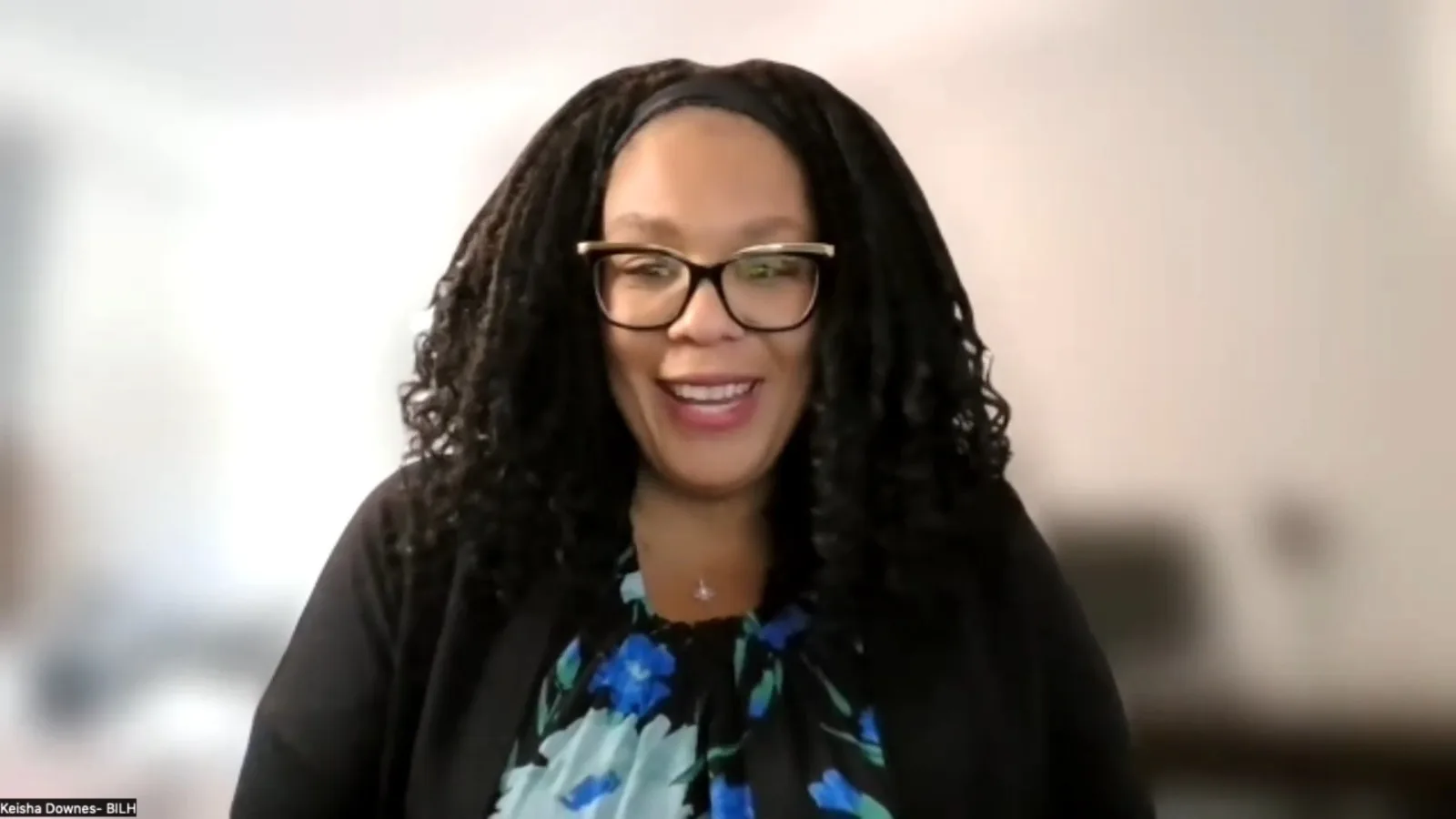

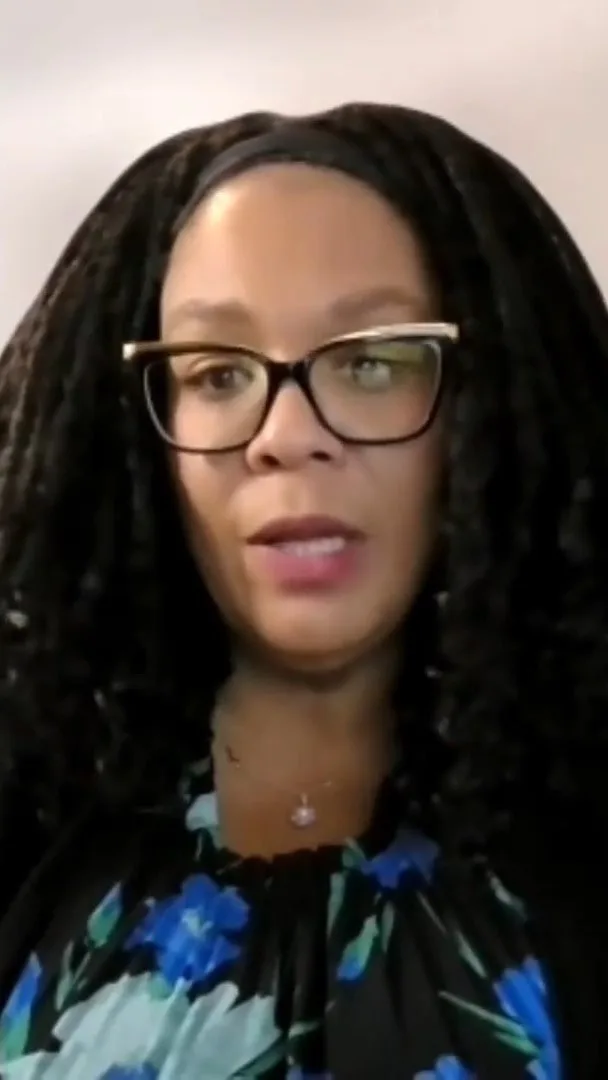

Guest: Keisha Downes, Vice President of Middle Revenue Cycle, Beth Israel Lahey Health Host: Praveen Chandran
Introduction and Clinical-to-Revenue-Cycle Leadership Background
Praveen Chandran You're listening to the RC Executive Lounge podcast, the show where healthcare revenue leaders share real-world strategies, hard-earned lessons, and bold ideas shaping the future of revenue cycle. The views expressed by guests are their own and do not constitute endorsement of any specific product or solution.
Hi everyone, and welcome to another episode of the RC Executive Lounge podcast series, Season 2. I'm your host Praveen, and I'm super excited that you're all joining me here for this episode today. I'm super excited to welcome today a leader whose career uniquely bridges frontline clinical care, enterprise revenue cycle operations, and the responsible application of emerging technology in healthcare.
Our guest is Keisha Downes, Vice President of Middle Revenue Cycle at Beth Israel Lahey Health, where she leads middle revenue cycle operations across a multi-hospital system. Her scope spans clinical documentation integrity, hospital and professional coding, health information management, and utilization management, functions that sit at the critical intersection of clinical quality, compliance, and financial performance.
What makes Keisha's perspective especially compelling is that her path into revenue cycle leadership is deeply rooted in clinical practice. With more than 20 years of nursing experience, including critical care roles in neurosurgical ICU, trauma stepdown, and interventional radiology, she understands healthcare from the bedside up. Over the past decade, she has translated that clinical insight into leading high-performing revenue cycle teams that strengthen documentation quality, reduce organizational risk, and consistently exceed performance targets.
Before joining Beth Israel Lahey Health, Keisha served as Senior Director of Mid-Revenue Cycle at Tufts Medicine, where she led large-scale operational transformation and the centralization of middle revenue cycle functions. In her current role at Beth Israel Lahey Health, she has been directly involved in the successful implementation of AI applications within middle revenue cycle operations. Today she partners closely with C-suite leadership on enterprise strategy and change management, and she serves on her health system's Responsible AI Use Committee, helping guide ethical and compliant AI deployment.
In addition to her operational leadership, Keisha is actively shaping the future of the profession. She is an Adjunct Professor at Purdue Global, regularly presents at national conferences, and is currently pursuing her Doctorate of Medical Science at Northeastern University, with research focused on AI governance and middle revenue cycle applications.
Today we will talk about her journey from critical care nursing to system-wide revenue cycle transformation, how she thinks about aligning clinical excellence with financial integrity, what responsible AI adoption really looks like in practice, and the leadership principles that guide her work in complex health systems. I'm very excited for this conversation. Please join me in welcoming Keisha Downes.
Keisha, welcome to the show and thank you so much for joining us today.
Keisha Downes Oh, thank you so much for having me. It's always interesting to hear all the things that I've been involved in from others. So, thank you for sharing that.
Setting Strategic Priorities Using Data in Revenue Cycle
Praveen Chandran Fantastic. Okay, so let's jump right into our first topic. RCM and finance teams are in incredibly complicated and complex environments. And to add to the complexity, these teams also face a lot of pressure today from various quarters, starting from payer delays to staffing gaps, and patients seeking more options. The list goes on and on. How do you go about thinking about your top strategic priorities for your organization when you look ahead the next 12 months versus the next 3 years or 5 years?
Keisha Downes Well, I think the most important thing is to allow data to drive what it is that we are trying to solve. There are a lot of things out there that are not plug-and-play for all these different facilities. So understanding what the needs and goals are within our system, based off of that data, is what's really helping to drive what should be on our road map when it comes to this month, this year, or the next 3 to 5 years.
Praveen Chandran And you talked about data. Another related question when it comes to strategic priorities: organizations always bring a lot of interesting projects that contribute both to patient experience as well as to the ROI of the organization. But a leader at your level always has to make very tough choices. Maybe can you share an example from the last one to two years where you had to say no to a really good initiative in favor of something that was much more critical?
Keisha Downes Yeah, so I think when we think about technology and AI-type solutions, I know there have been opportunities to build bots and have RPA come in. But they weren't solving immediate needs. So when we're trying to prioritize where the truly operational opportunities are, sometimes while things are nice-to-haves, they're not necessarily going to help contribute to the digital transformation that we're trying to achieve. And sometimes we need some of those quick wins to be able to tap into versus the nice-to-have. So again, letting that data drive what we consider important for right now versus what we should be considering for future state.
Denial Prevention, Patient Financing, and Financial Assistance as Strategic Levers
Praveen Chandran That makes sense. And whenever we go to large events like HFMA, MGMA, and others, we hear a lot about topics like patient financing, financial assistance, claims denial management, and on and on in almost every one of these events. So where does something like denial prevention, patient financing, or financial assistance fit into your strategic road map? How do you think about that each year versus specific years where the need could be higher?
Keisha Downes Yeah, so I think from my standpoint, how I can be more proactive with denial management is really top of mind. Does that mean people? Does that mean technology? Does that mean process improvement? I know the buzzwords currently are around how do we get technology and AI to help combat some of the volume that we're dealing with when it comes to denials. In a recent conversation that I had, while there's a drive to try to be more proactive with denial management and not reactive, what we're finding is the volume is so overwhelming that we are just becoming reactive more quickly. So we're able to react to what the payers are saying and what we're getting back when it comes to denials in a more timely fashion. And we really want to try to get to that more optimal state where we can start having more prevention and be proactive with the volume of denials that we're receiving. So I think that's really top of mind for me in current state.
Balancing Proactive and Reactive Denial Management
Praveen Chandran Makes sense. And maybe a slight drill-down question on that specific topic of denial prevention, because you brought up two interesting topics in your previous response. One is denial prevention, and the difference between prevention versus reaction. How do you in fact strike a balance? Because every year is going to be different, and it also depends on how the payers are changing things on their end. There could be changes in policies, changes in documentation requirements, and on and on. That is on one end of the spectrum. And on the other end of the spectrum, denials themselves have a wide range of reasons, like credentialing or coding changes and on and on. So looking at this complete spectrum, how do you maintain that balance between proactive versus reactive, and how do you prioritize across these various areas within denial prevention to make sure that you not only serve the patients the right way but maximize the ROI for your own organization?
Keisha Downes Yeah, and I think that's why I say we're becoming just reactive more timely, because being able to stay on top of all of these policy changes and coding changes and rule variances definitely makes it more challenging to be more proactive. So I think what I'm trying to focus on, again, comes down to that data, looking at exactly what we're being denied for. Is it medical necessity denials? Are we not having the code that we've contractually agreed with the payer to have appropriate for medical necessity? And why is there an education opportunity with the clinician? Is there a coding opportunity? Is there technology that can help the clinician get the correct code that they need? Because clinicians are not coders. And a lot of this is we lean into the clinician to select the correct ICD-10 code, and we have to find a way to give them the tools that they need so that they can align a little bit better with the skill set of a certified coder. While we're past the state where we can have a coder sitting next to a clinician and helping them select the right code, we can upload policies into our EMR, we can tap into different types of technologies, and we can provide popups that can almost act as a coder to let the clinician know in real time, "Hey, you're missing your laterality. Hey, you can't use this family history code. You need to actually give me a diagnosis." And that helps again with the patient experience, as they're not having to face financial expectations above and beyond what would be covered by their insurance.
Praveen Chandran That makes sense. Keisha, great insights on prioritization and denial prevention specifically. With that, let's take a short break. When we come back, we are going to be diving deep into a recent initiative that Keisha's team led and what challenges they were solving for. Please stay tuned.
Welcome back. Thanks for staying on. Let's dive right in. So Keisha, as we mentioned before the break, I would love to dive into a recent initiative that you and your team led and what challenges you were solving for. Please take it away.
Clinical Documentation AI Case Study and Vendor Selection
Keisha Downes All right, so within the mid-revenue cycle, there's always a concern that there are documentation insufficiencies and coding opportunities. To be able to audit 100% of our encounters, we had almost 150,000 inpatient discharges last year that were eligible for CDI review. There's no way to review 100% of those encounters with the thoroughness to have confidence that we're not leaving anything on the table. So I had to determine how we could approach that potential problem, which was being reported back to me when we were considering MedPAR data and how our peers were performing versus how we were performing. I needed something to help validate if there was truly an opportunity. So what I was able to do was kind of twofold. One, build a team of subject matter experts that can focus on the areas that are high-value, low-volume so that those subject matter experts can focus in on that. And then as an additional layer, we added a pre-built AI tool. And what that pre-built AI tool was able to do was scrub 100% of the encounters and help understand, is there a documentation opportunity? Let's get that to the CDI specialist so they can query. Or is the documentation there but there was just so much documentation that the coder missed it? Let's get that back in front of the coder so that they can capture that code.
Praveen Chandran Makes sense. And once you identified the challenge, you mentioned that you built an AI solution. Can you talk us through how you went about selecting that particular solution? Was it built with a partner? Was it built internally? Maybe can you share your journey once you identified the challenge?
Keisha Downes Yeah, so we went through a third-party vendor, and there's a lot of technology out there. So it was a matter of determining what type of technology we wanted to implement. There are different types. There's technology where the vendor's team helps review and alleviates some of the burden from my team of having to review it. There's technology where the burden is on my team to review all of the suggestions and then take action. So it was more so just trying to understand where we were in current state and what I felt would help not just find the opportunities but also have that feedback loop, so that when we're finding those opportunities we're getting that information back to the coders and the CDI specialists as education, so those don't continue to be recurring opportunities.
Implementation Lessons and Measuring Impact with Case Mix Index
Praveen Chandran Makes sense. Any time a project of this scale gets started, and while going through implementation, there are always surprises, pitfalls, or interesting lessons learned along the way. What did those look like? Maybe could you share any unforeseen pitfalls, surprises, or interesting lessons learned from the implementation?
Keisha Downes Yes. So I learned a big lesson. I learned to start small and not big, and not to put 100% faith into AI. AI at the end of the day is just math, and it's looking at the probability of an opportunity being available. And that probability is never 100%. The machine learning can only do so much. So leaning into the technology a little too much and providing too much faith in the AI tool was not a fault of the vendor. It wasn't a fault of my team. It truly was a case where I should have started slow and really worked our way up. So there were some bumps along the way in the beginning, and ultimately I had to react quickly and make some changes. And now it's working exactly like I want it to work. It's a really great collaboration.
Praveen Chandran Overall, the project sounds very interesting. Some lessons learned and obviously it has added value to your organization. Could you talk about what the measurable impact has been so far, and how did you think about tracking success at different stages of the project and towards the end?
Keisha Downes Yeah. So thankfully this is about dollars, so it's easy to track dollars. Tracking dollars, check. And tracking our CMI, our case mix index. I'm able to see that line in the sand pre-solution and then post-solution, and I can see the positive impact it is having. That was also one of the things that helped me realize early on that there was an adjustment needed. When I was monitoring those numbers, the CMI and the financial impact, it was able to alert me pretty early on that there was a change in path that needed to happen pretty quickly. So those numbers have been my north star from implementation.
Praveen Chandran Fantastic. For our audience who are hearing this terminology for the first time, maybe could you talk about CMI, how you define it, and how you use it to make decisions for denials?
Keisha Downes So CMI is a fancy acronym: case mix index. And what it's looking at is the relative weight of a diagnosis-related group. Every patient who is admitted to a hospital is assigned what we call a diagnosis-related group. Their diagnosis and procedures are grouped into a certain number, and that DRG has a weight. It may have a weight of 0.002, or it can have a weight of 30. It can really vary. So we take that, and then there's an algorithm where we look at how many inpatients we've had discharged, and we have our payer rates, so we look at how much we get paid from the different payers. From that we get a number that tells us what our reimbursement is. And ultimately that CMI lets us know how acute our patients are, how sick our patients are, because the idea is that the higher the relative weight, the higher the acuity, and ultimately the higher the reimbursement.
Praveen Chandran Gotcha. And just as a follow-up clarifying question, you mentioned that for CMI every patient is assigned a diagnosis group. Are you ever in a situation where patients have to jump across diagnosis groups given that their complexity could vary during the course of treatment?
Keisha Downes 100%. And that's why we have our clinical documentation teams reviewing the patient while they're still in house, because that DRG can be fluid. A patient can come in with signs and symptoms, and as the patient's acuity grows, that DRG could also change. Sometimes the documentation doesn't support it. That's why we have those CDI specialists and the coders reviewing in real time, and they can query the clinician to make sure that the documentation is accurately reflecting the care that's being provided.
Praveen Chandran Fantastic. Learned a lot, especially around CMI. Keisha, thank you so much. With that, we're going to take a short break. When we come back, we are going to talk to Keisha about how she and her team think about up-and-coming technologies like agentic AI, AI in general, and on and on. Please stay tuned.
Welcome back. We are going to jump right into technology.
Agentic AI and the Path Toward Proactive Revenue Cycle Management
Praveen Chandran So, let's shift gears into technology. Keisha, what role do you see agentic AI playing in revenue cycle as you look at the next 12 months versus the next 3 to 5 years for your organization?
Keisha Downes So I think we're looking more at AI and technology that can not just suggest things but that actually acts. When you think of technology that pulls from discrete data fields and provides information, as we get into more agentic types of AI tools, it can actually act. It can say, "This is what the data is showing. Here are some potential outcomes that we should be considering." So when we're thinking about routine cases and denial pattern recognition, being able to act, when I think of payer information being loaded into the EMR, what we may get right now is an alert that says, "Hey, this may not be a covered diagnosis." When we're thinking agentic and being more action-oriented, it may say the denial percentage is this much for this particular diagnosis, and we should be considering X, Y, and Z, being more action-oriented versus task-based.
Praveen Chandran Makes sense. And in your mind, are there areas where AI can truly shift the game? And I'm not talking about minor incremental improvements. A technology of this scale tends to bring 5x to 10x step-function improvements to new fields. Do you foresee agentic AI playing that role of step-function improvements in the field of RCM?
Keisha Downes I do. When we think about ambient scribes and how that's been able to cut down the pajama time for our clinicians, but also provide more robust documentation, that's helping upstream make sure that the documentation is more optimized, which in turn makes sure that we are accurately reflecting the acuity of our patients. We are able to code to a higher level of specificity. And then if we're also able to put in that piece that says, "Hey, at the time of your order, this documentation or this code is not specified enough, here's the probability of a denial," we're moving into more of an action-based approach, allowing those clinicians to make those decisions in real time. And that's how we get to be more proactive with denial management and not reactive.
AI Tools, Governance Frameworks, and Responsible AI Adoption
Praveen Chandran Makes sense. And outside of agentic AI, are there any other up-and-coming technologies that you and your team are actively exploring, either specifically for RCM or even across your whole organization?
Keisha Downes I love AI and tools within RCM, and I constantly have different types of vendors reaching out to share what tools they have. You would be amazed to know the tools that exist for coding, including autonomous coding, where we can actually have encounters coded from documentation to claim without a coder having to be engaged. There's AI within the CDI space that's able to suggest documentation opportunities in real time, not just to the CDI specialist but also to the clinician. When I'm thinking about utilization management, helping understand those InterQual versus Milliman level-of-care opportunities, and then thinking about whether this patient is truly inpatient, observation, or outpatient, and what's the probability of this being denied, and how is this aligning with payer behaviors and payer policies. That can help us make sure that we're getting the patient level right. So there are so many different tools out there. It ultimately comes down to your team's bandwidth and how you're able to get these things implemented.
Praveen Chandran Maybe a related question to what you mentioned. In these kinds of environments with a lot of AI vendors and AI tools, bringing in many AI tools also means IT overhead. But there is also this problem of tool sprawl, where managing information flow across all these tools is complex, and even for the teams, learning all these tools and making sure they work coherently to get the required revenue cycle outcome is also complex. How does your organization think about that?
Keisha Downes I think having some type of AI governance is so important. I sit on the Responsible AI Use Committee. Above that we have the AI governance committee. And I think that's where the governance is overseeing what is being implemented, making sure we don't have things that are overlapping or duplicative, and also making sure that it meets the needs of our system. And we're also not just thinking about the technology and how it's being implemented. We're considering cybersecurity. How are we able to use this technology but also keep our patients and their information safe? That's very top of mind and very important. So how are we doing those things? I think having this multidisciplinary group come together, with not just RCM but also clinical support, IT support, legal, and compliance, gives us all these folks who are able to speak from their own professional aspect of how we should be considering these tools.
Praveen Chandran Makes sense. And you mentioned that you are part of the committee that looks at governance and compliance, specifically when you think about AI tools and AI vendors. Is there like a checklist of the top three to five things that you look at? Patient information and HIPAA are definitely one part. Specifically within AI, what are the things that you look at from a compliance, regulatory, or governance perspective?
Keisha Downes So I think the first question is always: what is the problem that we're trying to solve? Because again, there are so many tools out there, we don't want to implement something just to implement. How does it align with our goals? We have strategic goals that are organizational goals. How does this particular tool align with those goals? And then we also look at the maturity of the AI. What type of AI is it? AI is not just the blanket term it used to be. We're able to speak to whether this is NLP, agentic, machine learning, or deep learning. We can ask those types of questions. And we're also going even a step further, asking about governance internally from the vendor. Is there a black box? Are they able to explain what is coming from this technology? And where's the human-in-the-loop piece? Are there reports? Is there oversight? Is there auditing? All of these questions are very important to make sure that the tool is going to align with our goals.
Key Metrics and Candidate-for-Billing Visibility
Praveen Chandran That's perfect. One last question to close this segment before we move to the final segment on leadership. Every RCM leader we've talked to in this podcast series tends to look at one metric either every morning or once a week. Is there such a metric for Keisha? If so, what is that metric?
Keisha Downes Oh boy. So every morning I am looking at my CFB, my candidate for billing, because I want to understand if there are any barriers to getting these things coded and out the door. Especially with mid-revenue cycle, there are a lot of things that can hold up between HIM, coding, and CDI. I just want to make sure that there's nothing on my end that's holding these things up. There's a report that goes out every single morning, and I'm scanning my areas to make sure that we're not missing anything. And ultimately what I'm looking at is: how long has this been on the list? Do I need to support my leaders who are directly overseeing this list? What are the escalation needs? Is there a clinician who is out of town and whose documentation needs to be signed? Are we looking at this encounter from a quality standpoint? Perhaps we're looking at a PSI or patient safety indicator. Perhaps we're looking at a mortality encounter where we're trying to make sure we're accurately reflecting why the patient expired. There are so many different things that can contribute to why we want to hold up an account. I just want to make sure that we're not being a barrier to our AR goals.
Praveen Chandran That makes sense. Lots of amazing insights again. Thanks, Keisha. With that, let's take a short break. When we come back, we are going to be talking to Keisha about her thoughts on leadership, how she approaches leadership in a complex RCM environment, and what her leadership philosophy is in general. Please stay tuned.
Welcome back. Let's jump right in to the leadership segment of our podcast today.
Change Leadership, Transparency, and Leadership Advice
Praveen Chandran Keisha, change is hard, especially in a complex RCM environment. Change management is really tough. How do you build momentum for change across your teams? We talked about a major initiative in one of our previous segments. When you think about that kind of initiative, how do you think about change management and using effective change management to permeate change across the organization?
Keisha Downes So I think for me the biggest thing I live on is transparency. I don't like my teams to not understand the why, the intent behind some of the decisions that are being made. Everyone wants to know how these decisions impact them. So I'm very transparent with that as well. If a decision means that we're going to have to rearrange or reconsider how an org structure is working, I'm very transparent about that. I always lead with data. There's always data driving some of the decisions being made. I'm transparent about where the opportunities are, where the concerns are, and why these decisions are being made. So I'm very transparent when it comes to any decisions that are being made, and very open to receiving feedback.
Praveen Chandran Transparency is key. Great insight. Another related question. You've been operating at this level for a while. If you could give one piece of advice to another RCM leader or a CFO tackling similar challenges, what would it be?
Keisha Downes I would say don't let perfection be the enemy of good. A lot of times we feel this pressure that we're not allowed to make mistakes, that we have to be perfect. And as long as you are able to identify problems in real time, you're looked at more so for where you're able to adjust and adapt, not for the bad decisions that were made. And I think that's a perfect example of the implementation I described, where it was not successful in the beginning. There were a lot of questions and concerns. But ultimately because I stayed on top of it, we changed course in a timely manner. I'm not looked at as someone who made a bad decision. It's more so that we were on top of it, we were able to change course, and now we have a really positive outcome. The final outcome was amazing, and any issues along the way are seen more as a glitch in the journey than something that ruined the outcome.
Praveen Chandran So that's again a very powerful insight. Don't focus on perfection.
Keisha Downes Yeah.
Praveen Chandran Last question for the day, and hopefully this is a fun one. Is there a recent book, podcast, framework, or even an Amazon Prime or Netflix series that has significantly influenced your leadership thinking or changed your leadership principles?
Keisha Downes So I'm going to sound like a nerd, but Harvard Business Review has a collection of books that they have out. I'm actively reading this collection that focuses on managing people, strategy, change management, leadership, and managing yourself. I find myself actually quoting these books often. I really feel like they're helping to contribute to my view when it comes to leadership and how I also develop leaders underneath me.
Praveen Chandran And if there is one specific concept or principle that really resonated with you very deeply from any one of these books, maybe can you share an example for us?
Keisha Downes So there's one of the concepts within it, under leading people, which is: how do you tap into and keep employees energized who maybe don't have the experience to have a certain title or be assigned a certain responsibility, but they're eager, they're excited, and they really do want to contribute? There are ways for us to help feed that curiosity that these folks have, because these are really the ones who are going to end up being our future leaders. You don't have to have subject matter expertise all the time. You don't have to have longevity all the time to invest in someone who's really excited about the mission and the goals that you're setting.
Praveen Chandran Keisha, very powerful insights today. Thank you so much for joining us in the podcast today and sharing all these amazing insights. You've given our listeners plenty of takeaways from this episode. Thanks for joining us today.
Keisha Downes Thanks for having me.
Praveen Chandran You're listening to the RC Executive Lounge podcast, the show where healthcare revenue leaders share real-world strategies, hard-earned lessons, and bold ideas shaping the future of revenue cycle.