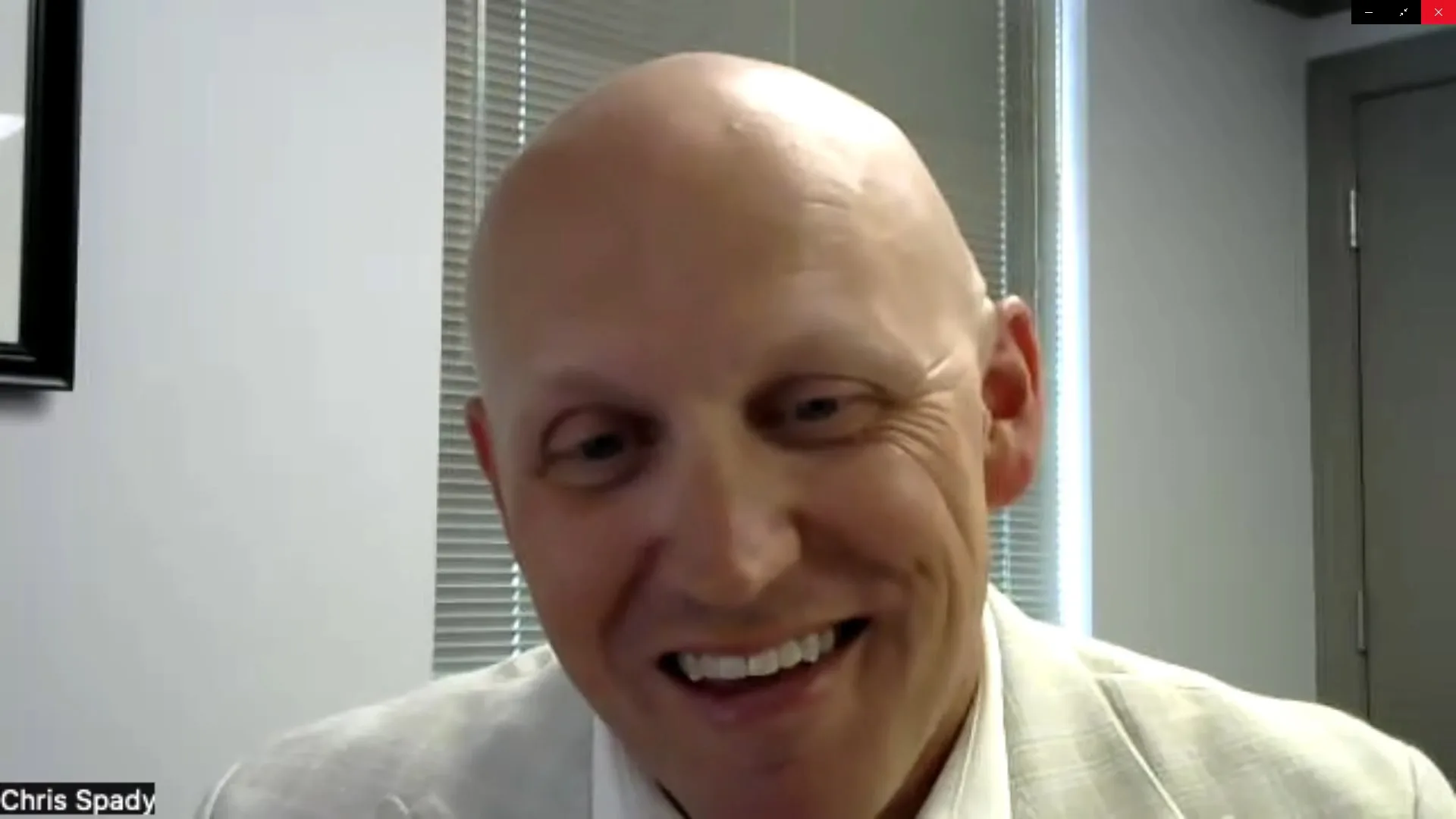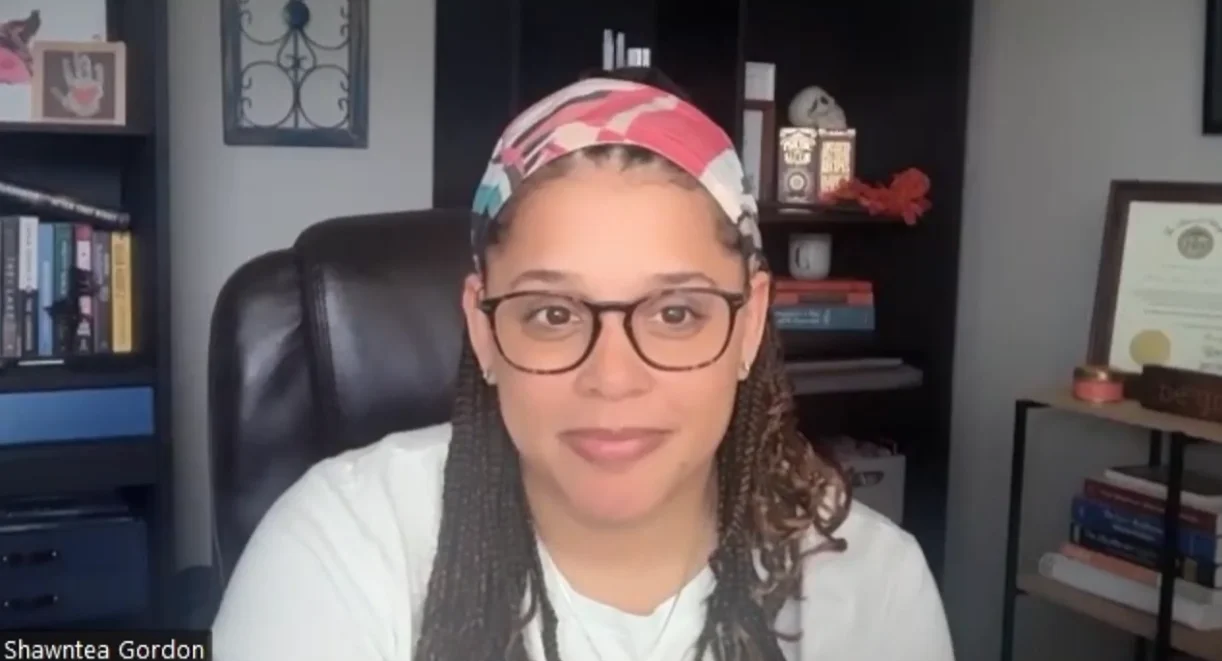
Guest: Taya Gordon, CEO & Founder, Atlas & Perpetua Healthcare Consulting
Host: Praveen Chandran
Introduction and Background in Denials Management
Praveen Chandran
You're listening to The RC Executive Lounge podcast, the show where healthcare revenue leaders share real-world strategies, hard-earned lessons, and bold ideas shaping the future of revenue cycle. The views expressed by guests are their own and do not constitute endorsement of any specific product or solution.
Hi everyone, and welcome to another episode of the RC Executive Lounge podcast series, Season 2. I'm your host, Praveen, and I'm really glad you could all join us today.
I'm thrilled to welcome back Shawntea Gordon, or as many in the healthcare community know her, Taya, CEO of Atlas & Perpetua Healthcare Consulting. Taya, you are joining us for the second time on the show. You were one of the earliest guests in Season 1. I'm really glad you're here, and I'm pretty sure our audience will be glad as well, because they know you as one of the most data-oriented people focused on RCM problems.
Since we last spoke, Taya's work has continued around the mission of helping independent physician practices, FQHCs, and rural health centers regain control of the revenue cycle before small problems turn into financial crises. As she puts it, revenue loss starts months before the claim, in documentation gaps, workflow breakdowns, and processes that don't make sense anymore. Her focus is upstream, where the damage starts, not downstream where it shows up on the financial report.
Taya holds an Executive Healthcare MBA from Creighton University and is a Fellow of the American College of Medical Practice Executives. She is the co-author of two MGMA-published books on revenue cycle management, including Revenue Cycle Management: Don't Get Lost in the Financial Maze and Advanced Strategy for Medical Practice Leaders: Financial Management Edition. She serves on MGMA's Government Affairs Council and E/M Workgroup, has taught as an adjunct professor of Revenue Cycle Management at Howard University, and co-hosted the RevDive podcast, one of the higher-ranked healthcare podcasts in the country.
What stands out about Taya's work is how directly it translates into outcomes for the practices she partners with. Clients have prevented and recovered six figures in denied claims, restructured aging accounts receivable, and rebuilt reimbursement strategies that were quietly leaking revenue. She translates complicated reimbursement and policy issues into decisions practice leaders can actually act on, with a style her clients describe as bringing both clarity and courage to the table.
Taya often says it's a great time to be in healthcare, if you're up for change and up for a challenge. Today we'll dig into what she's seeing in independent practice revenue cycles right now, where denial pressure is heaviest, how she thinks practices should rethink claims denial management for the way care is actually delivered today, and the leadership lessons she's drawing from her recent work. Now, let's welcome Taya Gordon.
Taya, thank you so much for joining us for a second time on this podcast.
Taya Gordon
Thank you so much for having me. I always love your introductions and I'm excited to dig in.
Praveen Chandran
Glad you like the introductions, and as I mentioned, we really enjoyed having you on the show last time because your answers were so data-oriented and metrics-driven. It brought a new dimension to our show. So today is going to be no different. I'm really looking forward to this conversation, especially because this is a new format focused on a specific topic. We're going to be focusing on claims denial management, and you're a specialist. So who better to talk about this topic today?
Taya Gordon
I love it. Yeah, and it's one of my favorite topics. So let's dive in.
Denials Management as Continuous Improvement, Not a Finite Project
Praveen Chandran
Fantastic. So with that, the first question I want to start with is: most organizations think of claims denial management as a multi-year ongoing initiative. How does it work with some of the health systems that you work with, and given that this is a multi-year program, how does a leader such as yourself determine the right priorities for the program in a given year?
Taya Gordon
Great question. I think the challenge is partially in how that question is framed, because if we think of claims denial management as a project that has a beginning and an end, we're not thinking about it in the right way at all. What we have to look at is how we can prevent denials strategically and optimize that on a continuous basis. So every quarter, what are our top three denials? How can we prevent those from happening next quarter? Once we've made progress on that, what are the next three? It's really not a matter of having something that is two or three years long as a project. It's more about looking at it in an ongoing way so that you are constantly in a state of optimization, particularly because payer rules are going to continue to change. By the time you get to the end of that original project end date, you're going to have new things to work on anyway. So it's best to go into it knowing it's going to be an ongoing endeavor.
Praveen Chandran
Understood. And you have looked at data across multiple health systems over many years. As you zoom out and look at all the data you have analyzed over the last five to seven years, what have been some of the top reasons driving denials across these health systems? What patterns have you observed in the data?
Top Denial Drivers Across Health Systems: Patterns in the Data
Taya Gordon
Oh, so much, and so much of it is absolutely preventable right now. I'm seeing a lot of preventable credentialing issues. I'm seeing a lot of cases where the code doesn't match the modifier, or the place of service doesn't match the code. I would call these basic foundational things that should absolutely be caught by our systems. And I think the overwhelming trend I've been finding is that overrides are just happening consistently. We have automation in our practice management system or our clearinghouse to catch those things, and instead of reading into it, listening to what it's saying, and trying to solve for it and prevent it in the future, we have a lot of team members who just override and send it out to get the claim out the door. And that's resulting in a denial.
So I think the one consistent thing over the last five to seven years is being so mired in the day-to-day that you actually lose the forest for the trees. Teams are so focused on one denial at a time that they're not operating in a way that allows them to move the needle in any significant measure.
Realistic Denial Rate Targets and Benchmarking Best Practices
Praveen Chandran
Makes sense. As you look at various health systems, we've seen some with really low denial rates because their operations are tight, and others where the denial rate is really high. Given this range, and when you look across health systems, what do you think is a realistic target for denial rate for any organization to aspire to, especially given the recent developments in agentic automation and the operational changes happening across the board?
Taya Gordon
Good question. If it's something they've never tracked before, then goal number one is to get down to the industry average. Depending on what state you're in, that's going to vary widely, somewhere around 10 to 14 percent. If you've already been working on that number, you should be under 10 percent. Once you get under 10, your goal is to get under 5. You just keep moving the needle. Once you hit that metric, you move it again. And right now, I would say the best performers in the nation have their denial rates down to around 1 to 3 percent. Some people tell me that's not possible, but if you are preventing denials and really optimizing your workflows, not only do I see it happen, but some of the more advanced groups we're working with in revenue cycle, that's consistent for them. They want to know how they can get below 3 percent. So it's absolutely achievable. Your first goal, if you've never worked on it before, is to get to the national average, and then just keep cutting that goal in half until you find what is really the baseline for your organization. Where do you plateau? Because you're always going to have some, but where is the plateau for your organization? It should be below 5 percent.
Balancing Operational and Innovation Priorities in RCM
Praveen Chandran
That makes sense. And when you are determining the priorities for any health system, working with leaders from operations, technology, and other teams, one of the challenges we've heard from multiple RCM leaders is there's always this competing priorities or a tug-of-war between the operational requirements and the innovation requirements. This can be viewed as a head-on tension between operations and technology, or it can also be viewed as a tug-of-war between short-term and long-term, because innovation is always a risky bet that takes time to implement while operational requirements could be quick wins but may not have the same scale of impact. In the organizations you've seen, how is this being managed? How do you determine priorities while managing the tug-of-war between operations and innovation?
Taya Gordon
Great question. First of all, you need everybody on the same page about what the goals of the organization are. Whatever your strategic plan is for the year, most organizations have that. You should have a revenue cycle strategic plan that aligns with the organizational strategic plan. So three years from now, you're all directionally correct, and both plans are moving in the same direction. That makes it easier to operationalize because it's not just you saying we really need to tackle this issue with this particular payer. It's you saying this is in the strategic corporate plan for the year. This is what the organization needs us to do as a whole. Let's break that into bite-sized chunks, and what can we accomplish now?
Usually the pushback from operations isn't that they don't want to work smarter or faster. The challenge is that they don't have the bandwidth. So the first thing I always recommend when you do that evaluation is to identify what things are consuming the majority of your time, and typically that starts with denials. How can we get rid of the ones that are happening most frequently, or the ones where the appeals are the longest? How can we prevent those first so that we create space for operations to have time to work with us on the rest of these opportunities?
So sometimes it's about creating the foundation for everything else to work in the first place. Make sure you're in alignment. Make sure you're communicating. Make sure they have the space to work on those things. It's typically not that they don't want to see the organization improve. It's usually that they don't have the bandwidth. So help them create some of that by preventing a lot of the burden that is currently falling on their plate.
KPIs, ROI, and Strategic Planning for Denials Programs
Praveen Chandran
That makes sense. And given that this is typically a multi-year program, what do success targets look like for any particular year in this program? And when you're looking at it across multiple years, when do you know that you're close to achieving your vision for this program? The question comes from a very specific perspective: whenever there is a multi-year program, at some point in time it might start to feel like there's declining ROI with more investment. So I'm really asking when is enough enough, versus when should you keep it as more of a maintenance program while continuing to improve but not putting a lot of resources into it?
Taya Gordon
Good question. This is why I keep circling back to your strategic plan. It should be based in evidence first and foremost. All your KPIs are going to inform it. Your aging days are going to inform what AR you're working. Payment lag is going to inform which payers you need to talk to. Charge lag will inform your billing processes, and so on. When you build that strategic plan, you should tie the ROI of every single task into it, because then you know, and it's an ongoing process. Every quarter, every six months, you're going to need to change things. You'll deprioritize some items and move others forward. You should always work on the items that are going to be the biggest improvement for you.
Sometimes that's not dollars in the bank. Sometimes it's eliminating risk and reducing the total dollars of risk in the organization, or it's eliminating an opportunity cost by paving the way operationally for teams to have time to tackle other activities. I think the key is that when you build your strategic plan, every time something gets added to that list, it should have a figure tied to it. That figure should represent either revenue increase, risk reduction, or operational burden decrease.
Then you can continue to reshuffle your priorities based on the needs of the organization. It's not really about saying at any point in time that we're not doing this anymore. But you should get to a point where the item you've been working on isn't the biggest priority anymore. Now we need to shift and focus on something else. It might come back. Maybe we need to do some recalibration. But ideally, you want to keep refocusing on what your highest-ROI activity is going to be.
Praveen Chandran
Taya, you've essentially given a nice framework for how to prioritize when there are things coming in all the time. That's very helpful. With that, let's take a short break. When we come back, we're going to talk to Taya about a recent claims denial management initiative that her team led and what challenges they were solving for. Please stay tuned.
A Case Study in Credentialing Errors and Code Bundling
Praveen Chandran
We are back. Taya, let's dive right in. Could you talk a bit about a recent claims denial management initiative that you led and maybe start with what challenges you were solving for?
Taya Gordon
Yeah. So the particular group I was thinking of when you mentioned this had a couple of issues going on. First and foremost, one of their biggest issues was a credentialing problem that they had but didn't fully realize they had. The second issue had to do with how some of their codes were set up in their system, which were templated improperly to work together.
The way it all transpired at first is they called me and said, "We're seeing a lot of stuff hitting our AR and we're not sure why. My staff is continuing to work, but we're not seeing the benefit of that." So I first dug in and we found a lot of this: "This provider is not eligible to provide this service" as their number one denial reason, and number two was "This procedure code cannot be billed with other procedure codes of this type on this day."
We dug into the first one. They had been repeatedly appealing it, saying this is a primary care provider, they're allowed to provide services in this state. They were pulling regulations from the state, saying look at the scope of license for this nurse practitioner, they should be able to provide a primary care service. And they just kept appealing like that, over and over. We dug in and eventually found out that the person doing their credentialing had at some point made a mixup. They were adding individual contracts for that provider and not putting them under the group contract, and at some point had just stopped entirely. So the payer had no clue that provider was even with the group, and that's why everything was getting denied. Most of these things are automated. It's not like somebody saw it and said, "Oh, ABC Clinics is on here, they must be part of that group, let me give them a call." It's the automated system going, "These two things don't match. Sorry, rejected." And instead of digging in and just calling the payer to ask what the problem is, they had spent months just trying to appeal all of those denials, and inevitably a lot of that ended up written off. Once they finally pushed the payer and said, "Hey, we do have this provider, we need to add her," the payer was not giving them a retroactive effective date. So that one was really painful because of the lost revenue.
The second big issue was claims coming in saying you can't bill this procedure on the same date as this other procedure. Somehow in their system they had built a bundle of codes, and any time one was billed, two others were added automatically. It was happening every single time. And I say this a lot: there is no service code that you will bill for every patient every single time. It's always going to vary. It should always vary. Even if somebody comes to you and says, "Look at this brand new shiny code, you can bill every patient every time," that's a red flag. That's not going to happen. And that was the problem. They built it into this bundle, so they were automatically billing this bundle of codes, and what happened was they ended up on prepay review with the payer. It was a bit of a mess. So at the end of the day, we only had to do two things. One, we removed that code bundle so it doesn't automatically happen anymore. We educated the providers on when they should add it and when they shouldn't. And then the second thing was just notifying the insurance company that they had a provider who had been there for six months.
Neither of those were honestly huge things. They weren't things they should have had to outsource, but they didn't know where to go to get the data or how to dig in to prevent those things. So I understand why they called, and I'm glad they did rather than letting it continue, but these are two examples of things that can be really costly. In one case, it ended up putting them in prepay review, so now their clinicians are being audited before payment by that payer and a couple of others. And all of that could have been prevented.
Praveen Chandran
Makes sense. And as you look at the implementation and data analysis for these two issues, were there any pitfalls, surprises, or lessons you'd like to share with our audience? Any aha moments as you went through the analysis and implementation?
Taya Gordon
Yeah. For them it was just looking at their denials data. But I would say that happens to me pretty regularly with other groups, and sometimes it's a good thing because they're like, "Oh, that's what was going on. Now we know and now we know how to fix it." And then sometimes it's just really sad. I spent a weekend recently diving into data for a group on an urgent basis, and it was a really difficult situation because all the data was right there in their denials to tell them what they needed to do to fix it, and it had been wrong for so long that they're not going to be able to go back and collect it. Those are the harder situations, because when I pull the data up and say, "Hey, this is what the denial data is telling me," that's usually their aha moment. They can see it in the numbers. The evidence is there. I don't come in with any kind of magic wand. I just look at their data and help them interpret it. Usually the aha moments start to happen when we begin digging into their data and illuminating what's in there.
Praveen Chandran
Makes sense. And when you look at fixes like these, could you talk about the scale of measurable impact and how an organization should be tracking success for initiatives such as these?
Taya Gordon
Absolutely. There are a couple of things. First, if you pull down your denials and you see all of the denials you had in the last 12 months with a specific reason code, you can then estimate how much time it took to work those denials, how much that cost you in lag in your AR, how much time that required from staff, and what the opportunity cost was. If your staff is appealing claims, they're not working on current claims. So when we look at those three things together, we can begin to quantify exactly how much this is costing the organization.
When I run those analyses, the ROI tied to everything is always bigger than people realize. The last two or three I've done have all been right around or over half a million dollars in ROI for doing the top three things on my list. I always give them the ROI of everything and then specifically the top three. The last two I know for sure were both over 400,000 dollars in ROI. And that is actual dollars spent on working these denials and chasing money that they should never have had to chase in the first place. When you quantify it like that and show them what it looked like over the last 12 months, and then forecast what it's going to cost over the next 12 if they don't address it now, the cascading benefits become clear. They collect their money faster. They don't have additional denials on this issue in the future. Staff can start working current AR a lot faster. Burnout reduces. Friction with staff reduces. Turnover goes down. The benefits just keep cascading. So while I limit ROI to things I can physically measure, because I'm an evidence-based person, there are also intangible costs beyond that.
Praveen Chandran
That's some pretty significant impact. Thanks for sharing all those insights. This is a good place to take a short break. When we come back, we're going to be talking to Taya about how agentic AI fits into this whole claims denial management initiative. Please stay tuned.
Agentic AI as a Thought Partner in Claims Management
Praveen Chandran
So wherever we go, agentic AI is the new shiny ball, and we hear it at MGMA, HFMA, and HIMSS. What role does a leader such as yourself see agentic AI playing in claims management initiatives as you look ahead over the next one year versus the next three to five years?
Taya Gordon
It's interesting. I'm hoping that we start to see it reduce burden and give practices a little more time. I did sit through a session not long ago where someone said it's going to replace billing teams everywhere, and that's simply not going to happen anytime soon. There's too much complexity. We need to really focus the AI tools and the workflows we have on the things AI is good at. AI is still in a place where it's safest to use with really strong guardrails. If we use it almost like a brand new intern, tell it very clearly what you want it to do, and then after it does it, make it surface the results to you so that you can make sure it did what you asked correctly and that nothing needs to change. We're still kind of in that space.
I would love to see agentic AI get to the point where it can start predicting denials really well. I've seen it in a couple of places, and I'd like to see groups implementing that in structured ways and working alongside it to continue improving their operations. One of my concerns, outside of people using it without a solid framework and guardrails, is too much leniency and not understanding what's going on. In that sense, it's similar to if you outsource your entire revenue cycle and never look at it, and then three years later you're in a really terrible position because there was no oversight. I would hope that in the next three to five years we have really great solutions we can leverage, but that we are still involved, invested, and engaged in the revenue cycle so we know what's happening at all times. I think that's going to be really important.
I'm excited about it. I talk about AI because I'm excited about what it can potentially do and how it can, in some ways, help level the playing field between independent practices and larger health systems. But I am cautiously optimistic. I really believe there needs to be a high level of framework and compliance around everything. If you are using your AI just to give you back time and you're not staying really invested in oversight, then it becomes more dangerous than beneficial.
Praveen Chandran
Makes sense. And earlier in the episode you talked about various reasons why denials could happen, and you've seen the reasons in the data. Obviously when agentic AI-based automation comes into claims denial management, some of the changes are going to be incremental while others are going to be truly transformational in terms of impact. Are there areas in claims denial management where you think agentic AI can truly shift the game, almost like a 2x or 3x impact, rather than just incremental improvements?
Taya Gordon
Absolutely. And I think it's in what we don't do right now. You can use robotic process automation to automate many step-by-step processes, but AI works a little differently because it's thinking. If you can structure it in a really clean way to alert you to things, then it's going to be able to do what you're not doing right now when you get stuck in the weeds. It's going to pull up and say, "Hey, you have these 15 denials and we're talking about a prevention strategy for those, but you also have these 10 in this department, and I think this might be a departmental issue." It might connect those dots for you. Or it might say, "I see that we have this issue with this payer. We also have these others together. That's a bigger issue you may not have noticed. I recommend the following next steps with the payer." I think that's where it can be really helpful, not just in alerting us that something's happening, but in connecting those patterns across the organization. We can do a lot of basic alerting right now with robotic process automation. I think AI is helpful in being another thought partner.
And you know, we talk a lot about dyad relationships between physician owners and practice administrators, or the CMO and the CFO, and having that really strong operating partner. I think AI can also do that in revenue cycle. It can become a thought partner with you to help dig into things. What are the reasons our AR is increasing? What are the top things? And if you are not adept at going to get your own data, trending those things, alerting yourself, then just build out the instructions and the processes and the parameters for the AI to do it and then let it help you with that, as long as you're doing it in a fully compliant way, because it still involves patient information.
Praveen Chandran
Makes sense. And when you look at claims denial management outside of agentic AI, are there other technologies you're watching closely that could help reduce claim denials in general?
Taya Gordon
Oh, there's so much happening in the space, almost too much for me to watch closely, because there are so many new players coming in. Some of the interesting things happening in AI right now, I'm very interested in healthcare-specific AI implementations. A lot of groups in healthcare are using tools like ChatGPT or Claude or similar platforms, but most of those don't have a HIPAA-compliant version unless you're at an enterprise level with 50 or more employees on the platform. For smaller practices, that's not going to be HIPAA-compliant. So if you want to use an AI tool, what type of HIPAA-compliant AI are you using? There are now a lot of companies leveraging locked-down versions of Claude, Anthropic, or OpenAI, and those are interesting to me because in some cases we need to help protect clinics from themselves. They don't know all of the compliance areas and the potential issues they could get into. So I am interested in seeing where healthcare AI and healthcare AI compliance merge and coalesce into something that can really help, because then you get the automation, the advanced processing, and the thought partnership without all of the risk. I'm excited to see where that's headed.
Praveen Chandran
That makes sense. With that, let's take a short break. When we come back, we are going to be talking to Taya about challenges that leaders navigate in the area of claims denial management, how they think about change management, and how they manage competing priorities. Please stay tuned.
Key Metrics Every Claims Leader Should Track Daily
Praveen Chandran
Taya, every leader obsesses over a particular metric that they track every morning. What does that look like in the area of claims management? In your view, is there one metric, or maybe two or three, that an RCM leader or claims management leader should be looking at every morning?
Taya Gordon
There are so many. I could give you all of my favorites. I'm a visual person. Give me all the visual charts so I can just glance and know if everything's okay. But the things I look at most often are: what are our top three denied procedure codes, and what are our top three denial reasons? I want to look at charge lag on a daily basis to see how that's tracking and make sure it's moving well. Days in AR is a good one to look at. Net collection ratio is a good one to look at.
If you're a little more advanced operationally in how you're measuring things, I love putting a really clean net collection ratio in there. Not just your traditional looking at payments compared to charges minus adjustments, but pulling in your actual allowed amounts versus your payment amounts and a variance report on that. And then I would probably add in a couple of others that help surface downcoding situations. Work RVUs, some things that can be highlighted in the denial space that you wouldn't ordinarily think about, and in the downcoding space. If you start to see that your paid RVUs, not what you billed but what you got paid, are going down, and you're seeing your days in AR go up, that's an indicator that something may be lagging in your denials and you might want to look at that. If you see your top three denial reasons change, or if a particular procedure stays at the top of the most denied list, those are all indicators that there's something deeper you need to be looking at.
Root Cause Analysis and Breaking Through Improvement Plateaus
Praveen Chandran
Makes sense. You've worked across multiple health systems. In your perspective, what are some of the biggest challenges faced by organizations in bringing step-function improvement to reducing denials? Some organizations seem to get stuck at a baseline and make small incremental improvements but never get to the national average or even best-in-class below 5 percent. What are some of the biggest challenges stopping them from getting there?
Taya Gordon
The top two things: they stop when they find the symptom, and they don't communicate well with one another. Those are probably the two biggest things.
A lot of times I see people dig into the data and say, "Well, I saw this, so we tried to fix it." They saw that a provider was ineligible to provide a service, so they kept appealing that. They didn't dig any deeper to identify the root cause. And just like in medicine, sometimes what you're looking at is a symptom of something completely different. How bad is it for clinicians when they're diagnosing and treating just a symptom rather than the root cause? Not only does the patient suffer and care is delayed, but the physicians feel terrible. We don't want to do the same thing. We want to make sure we actually got to the root cause.
That is a big point of failure with groups. They stop looking at step one and say, "Oh, there it is, we found it, let's go fix that." Just keep digging. Make sure that's actually it. Try to break your own assumption. Think: I think it's this problem, let me see if I can prove myself wrong. Try to challenge that conclusion.
And then the second one is really communication. I can't tell you the number of groups I come into where the revenue cycle team and the billing team are essentially at odds. "It's not our problem. The providers don't know how to document and the front desk isn't doing their job." And then I go up there and the providers are saying, "I see 30 patients a day and then a coder comes up here to tell me I'm wrong. I'm a physician." And I'm like: I'm pretty sure all of you have the same goal. Let's get the patients taken care of, let's get paid at the end of the day, and let's not drive ourselves crazy while we're doing it. You all have the same goals. When it becomes adversarial, you're never going to get there.
Sometimes it's just pivoting the conversation. You don't need to go to the provider and say, "Hey, you did this wrong." You can coach them. Say, "I see you documented this at a level four, but to do that, you would have had to do one of these three things, and I didn't see it in the note." And the response you get is, "Well, I always do it, but I didn't know you needed it in the note." That's the kind of thing. So the more you can build communication and trust with one another, and all get onto the same page about the real root cause of the issue, that solves the majority of the problems that I see.
Building Momentum for Change, Leadership Advice, and Closing Thoughts
Praveen Chandran
That makes sense. Let's go back to one of the questions we discussed earlier in the episode, the tug-of-war between the technology team and the operations team, but from a different angle, more of a leadership perspective. When you're faced with that tug-of-war and have to execute on an initiative related to claims denial management, how do you build momentum for change across these teams? Picking an operations initiative is probably going to disappoint the technology team, or vice versa. So building momentum for change is obviously a big challenge. How do you go about doing that?
Taya Gordon
It comes back to the same things. One, you need evidence. And two, you have to be willing to do a little bit of education and show people where you are. When I come in and show them all the evidence and say, "Look, these are the issues we found. This is what it's costing the organization. This is the downstream impact. This is what we would need to fix upstream to avoid those. If you were in my shoes, which one would you fix first?" Once they have the ability to see all of it, it becomes readily apparent.
Usually the pushback is that they don't have time. So we have to help them make time, or they just don't understand it. Very few times do I go into an organization where any clinician who is not the physician owner understands the revenue cycle. Very few times does the front desk understand how we get paid, how claims get dropped, how important their job is. So you have all of this lack of experience, understanding, or literacy in the revenue cycle. And then you kind of get surprised when they don't feel an imperative to work on those things. If you go to the front desk and just start hammering them about making sure they get the plan ID every time, they do not understand why you're upset. But if they shadow the billing team for two days and have to sit on hold with a payer for three hours trying to work an appeal, all of a sudden it means a lot more to them to get the plan ID right.
So much of it is about stopping the siloed work, showing people what problems their actions are causing downstream, so that we can work together to design solutions that make sense. And once you do that, that's usually when you start getting everybody else on board. Because if you don't, you have the ability to ask the question: you see this is the issue costing us the most money and creating the most burden. Can you tell me why we shouldn't address this one first? Sometimes there's a good reason. Sometimes someone says, "This one over here impacts patient care and I feel like we should address that first." And you know what? They're probably right. Let's tackle that one first. But if you can't have everybody at the table, can't communicate clearly, can't share the evidence, and you just want people to blindly trust you, you really shouldn't be surprised when you can't get the initiative off the ground.
Praveen Chandran
I think a recurring theme I'm hearing throughout this episode, from everything you've said, is that training people and making sure they are aligned and marching in the same direction could solve a lot of these problems. That seems like a deep-rooted cultural issue that needs to be solved.
Taya Gordon
Yeah. And the groups I go into that are doing the best, they have that sorted already. Their culture is great. They're communicating. They have daily huddles. They have a process for escalations. Their governance structure is solid. People tend to skip over that. "Well, we're a small clinic, we don't need a governance structure." Yes, you do. People still need to know who to go to when they have a question. And if you don't have any structure like that and you just keep hiring new people, whoever trains them is just copying and pasting the same skill gaps. Unless you want to copy and paste the same skill gaps across every member of your team, you have to focus on education and getting people properly trained.
There are groups that bring me in, and all I have to do is design the strategy and they can fully implement and deploy it themselves. They have the buy-in because they made sure everybody had a seat at the table. And that's the difference. If you can communicate clearly, show people your perspective, and come to a collaborative solution, you can make real progress. But if everyone is just fighting for what makes their own day easier, it's not going to happen. Silos really never work. They just don't work at all.
Praveen Chandran
Yeah, makes sense. If you were to give one piece of advice to another CFO or RCM leader tackling challenges specifically in claims denial management, what would it be?
Taya Gordon
There are so many things. I think what people forget is that they can create automations in their clearinghouse and their practice management system. You can start to create your own rules to solve for the human element of what you have going on. And I think there are so many groups that don't really solve for education in a good way. Their front desk doesn't really understand the back office. That's a huge problem, because then they don't understand how important their job is, and their job is 97 percent of whether or not you're going to get paid.
And I think another thing they don't look at very often, which I'll call denials-adjacent, is the other stuff that's missing. How many claims did we submit that we never got a response on? How many claims do we have that are still sitting in a pending status? How many claims are sitting in the 120-plus bucket, and it's 100 percent of that payer's balance because somebody at the front end or in billing added a new payer with the wrong plan ID and it's not even making it on file? So I think some of those I would call more claims management than denial management. But if you look at the data, if you genuinely just start looking at relevant periods of time, don't just look at the last 15 days. Look at the last 12 months to start, and then look at rolling quarters after that. What you need to do becomes so readily apparent.
Praveen Chandran
That makes sense. One last question to close the episode: is there a recent book, podcast, or framework that has significantly influenced your leadership thinking, specifically in the area of claims denial management, in the last two years?
Taya Gordon
For my leadership thinking specifically, I'm not sure there was one particular book, but there is a great podcast. The Growth Edge leadership podcast is run by a woman named Lorie Bedke. She is brilliant at not only outlining leadership discussions in healthcare, but also in coaching executives to become stronger leaders, to build dyad relationships. She has three or four books on that topic and is just a powerhouse of knowledge in that area. I had the privilege of speaking with her not long ago. She is just tremendously encouraging in how to develop good leadership and communication skills and to build a team that not only wants to follow but wants to work with you, wants to work alongside you, and dig out of whatever challenges you face together to build something fantastic. I would say that's a really good solid place to start. Check out her books and her podcast. She's pretty fantastic.
Praveen Chandran
Taya, great set of insights today. Again, I would have expected nothing different given your depth of experience in claims management, especially the amount of data you look at on a daily basis. Thank you so much for all the wonderful lessons you've shared with our audience on claims denial management. And again, I really hope to have you on the show on another topic given your depth of experience. But until then, thank you so much for all your wonderful insights today.
Taya Gordon
Of course, thank you so much for having me on the show again.
Praveen Chandran
You're listening to The RC Executive Lounge podcast, the show where healthcare revenue leaders share real-world strategies, hard-earned lessons, and bold ideas shaping the future of revenue cycle. The views expressed by guests are their own and do not constitute endorsement of any specific product or solution.