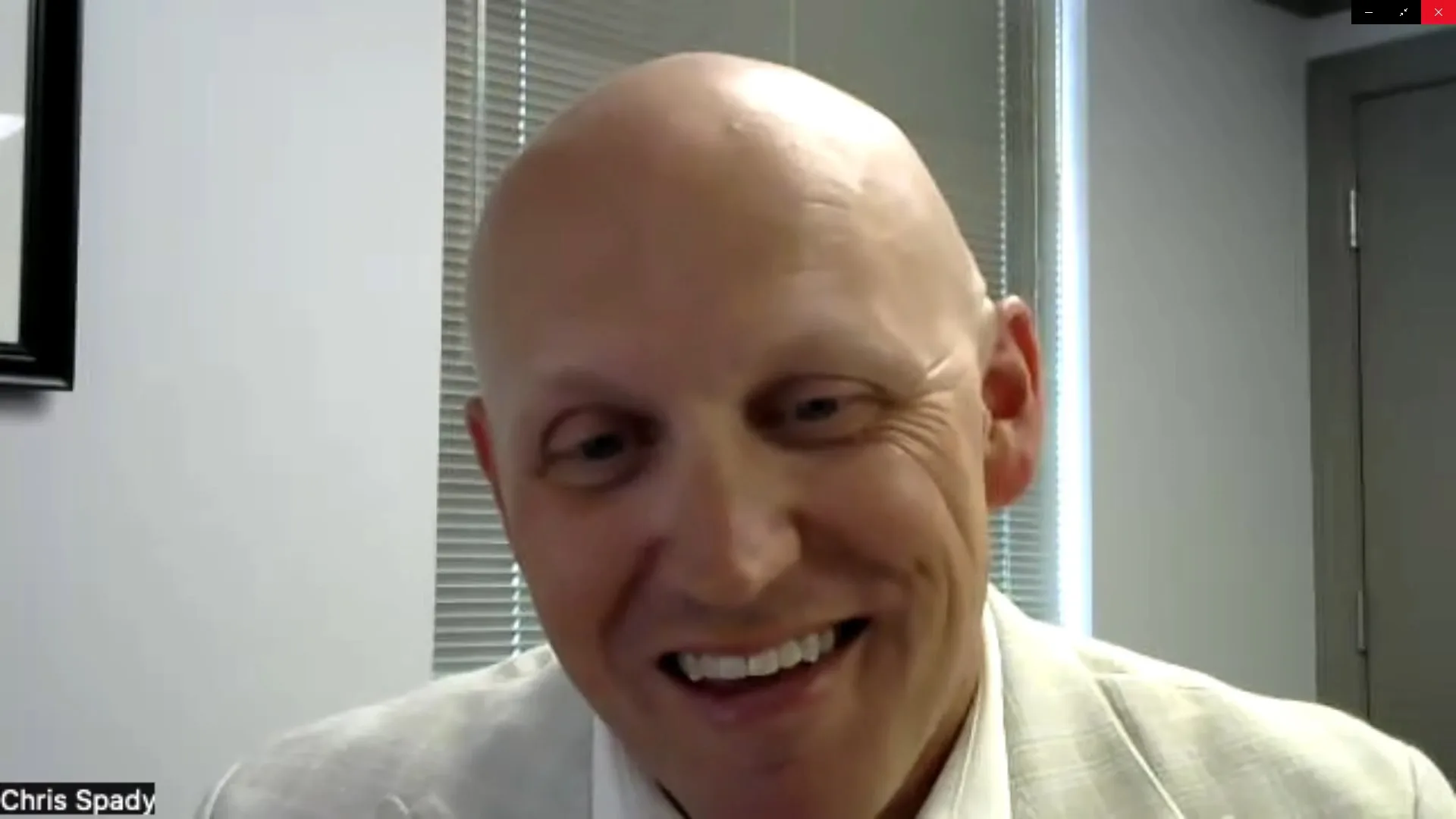



Guest: Chris Spady, Senior Vice President of Revenue Cycle, Erlanger Health
Host: Praveen Chandran
Introduction and Revenue Cycle Leadership Journey Across Major Health Systems
Praveen Chandran
You're listening to The RC Executive Lounge podcast, the show where healthcare revenue leaders share real-world strategies, hard-earned lessons, and bold ideas shaping the future of revenue cycle. The views expressed by guests are their own and do not constitute endorsement of any specific product or solution.
Hi everyone, and welcome to another episode of Season 2 of The RC Executive Lounge podcast series. I'm your host, Praveen, and I'm really glad you're all joining us today.
I'm super excited today to welcome a guest whose revenue cycle leadership journey has spanned multiple major health systems across the Southeast and who has now returned to lead at one of the most important community-focused health systems in the region. Our guest is Chris Spady, Senior Vice President of Revenue Cycle at Chattanooga, Tennessee-based Erlanger Health.
Chris recently returned to Erlanger after serving as Southeast Division Vice President of Revenue Cycle for Chicago-based CommonSpirit Health, where he spent two and a half years following his earlier tenure as Erlanger's VP of Revenue Cycle from 2019 to 2023. So this is very much a homecoming for him. In sharing the news of his return, Chris said he is grateful for the opportunity to come back to an organization and community that means so much to him.
Chris brings more than two decades of progressive revenue cycle leadership, with earlier roles at Riverside Health and Sentara Healthcare in Virginia. He holds an MBA in Healthcare from George Washington University and a BS in Healthcare Administration from James Madison University.
What I find particularly compelling is the philosophy Chris brings to his work. He describes his teams as taking on the business side of the patient experience, and has said, "Healthcare can be frustratingly confusing. Our job is to make sure patients understand each step in the process." That patient-first mindset has translated into concrete results. During his earlier tenure at Erlanger, Chris led a financial transformation that included initiatives like submitting infusion claims per session instead of monthly, yielding an eight million dollar cash acceleration. He has also expanded the health system's charity program, noting that by handling patients with compassion, we have actually increased collections.
A quote he has shared that captures his approach comes from C.S. Lewis: "Favorable conditions never come." Chris describes his own style just as simply: "I come at things calmly, but I like to win." That's a powerful leadership mindset. We'll talk today about his return to Erlanger, his philosophy of compassionate patient financial engagement, how he thinks about technology and automation, and the leadership lessons he has learned along the way. Now, let's welcome Chris. Chris, welcome to the show, and thank you so much for joining us today.
Chris Spady
Hey, thanks, Praveen. Thanks so much for having me.
Denial Management Framework: Governance, Ownership, and the Clinical Shift
Praveen Chandran
With that, let's dive right in. Chris, most organizations have claims denial management as a multi-year ongoing initiative. How does it work in your organization, and how do you typically determine the priorities for this program? What is your framework in approaching this program?
Chris Spady
Sure. I think denials management is a forever initiative, unfortunately. I like to imagine a world where there aren't denials and what that would do for patient care, and if we could just refocus so much of what's spent back to the patient. But of course we know that's not the world we live in.
From a cost perspective, I don't know if the public realizes that care is actually very rarely denied. It's just the reimbursement after the care happens. So from a cost management standpoint, we're really not managing cost. It's just the reimbursement on the other side of things that makes us manage cost that much more on the provider side.
At our organization here at Erlanger, there are several layers of denial management. There's a governance layer, first and foremost, and our CFO kind of oversees those. We have different governance layers based on the different segments of the revenue cycle, and then there are operational layers as well, which go down to myself and down to the directors. All of it is about making sure we're moving KPIs and also making sure that we are true owners of our denials. That's kind of the expectation of our leaders. So from a framework perspective, that's kind of how we do it: governance and operational, and it's like anything else, there's always a new challenge in the denials world.
Praveen Chandran
Chris, when I look at your past experience, you're one of the leaders I've come across who has worked in some pretty large health systems across the nation. Looking at all your past experience and the data from those systems, what are some of the top reasons driving denials? What patterns have you observed not just at Erlanger but when you look at CommonSpirit Health and every other system you've been at in the past? What does the data tell you?
Chris Spady
Denials have changed quite a bit. If you just look over the last five to ten years, we have moved from a realm of about 85 percent technical denials to now being above 50 percent clinical denials. And so that has changed from a situation where revenue cycle can manage this for the most part, maybe with some conversations with departments, to now we have a very long runway to manage a clinical denial, with cross-functional teams we've got to bring in and more clinical staff involved.
That's been the biggest change we've seen recently. The 835 remittance may say it's a medical necessity denial, but we are very rarely arguing medical necessity anymore. We're arguing: should it be inpatient, should it be outpatient? And there's just a tremendous financial gap there. And payers are refusing to do peer-to-peer reviews now. So where you've gone from a world where you were winning 70 to 80 percent of those peer-to-peers to where you have to fall back on the written appeal, which has a much lower win rate. That's kind of the fight right now regardless of organization size: making sure you still do all the technical things that were important before, but now it's really from a clinical perspective. Are we making the right decisions, and are there partners that can help us do that? It's just a very long runway.
Competing Priorities, Benchmarking, and Setting Success Targets
Praveen Chandran
Makes sense. And typically as you think about this multi-year program, there are always competing priorities that take resources and bandwidth away. What are some of those competing priorities your teams face, and how do you determine priorities between operations requirements and innovation requirements? The tension is real: operations can eat into innovation and innovation can eat into operations.
Chris Spady
It's a great point. There's always competing priorities. We could all have full-time jobs just by showing up to the meetings on our calendars and answering our emails, and sometimes we're really not being super productive by doing those things. Inclusion and progress is the first thing. We want to be inclusive of everyone, but I am a big believer in small teams moving fast. It's hard to get something done in a setting where 25 or 30 people are trying to make decisions. So we have to trust each other from a revenue cycle perspective to make sure messaging is getting out, but from a decision standpoint, if you are one of the small team members, you are there, you're engaged, and you're helping to make decisions.
And everything about IT bandwidth these days is different. It wasn't that long ago that I would call Steve and say "hey, we've got a high-priority project, can you get it done?" and he might say, "I'm swamped, but I'll get to it by Thursday." Now it takes Tuesday and Wednesday to fill out the form to send it in on Thursday, to go to a committee, and all those steps are important, but it's a different world given cybersecurity and IT bandwidth. That has to be a part of the decision too.
Opportunity dollars are a big one, but it can't be the only thing. Speed to implement matters, and KPI position too, because you might be doing well in one area but have a bigger gap elsewhere. And everything is changing with this AI world. It wasn't that long ago that I would say let's see what's happening. Someone would come in and say we'll automate it, and I'd say, fantastic, show me where you've done it before. That was hard. Now, with AI, it's gone from let's watch to we have to be really involved and engaged. The thought of signing a three-year contract today is very different than it was just two or three years ago. So you have to balance all of those things to create your priorities.
Praveen Chandran
For a program like denials management, I've heard the best-in-class have denial rates as low as 4 percent, and some organizations have had rates as high as 27 percent. For a leader who has been in this industry so long, what do you think is the right success target for any organization for any year in this program, and when do you know you're close to achieving your vision?
Chris Spady
That's a great question. First, you have to know the data. You have to understand whether we're talking about initial denials, fatal denials, writing things off at a net level, or writing things off at a gross level, because that can really change your numbers and your comparisons.
We really use a lot of the Epic Financial Pulse. That gives us the most apples-to-apples comparison we can get to. It's not perfect, but it allows us to see not a static number but what's actually happening, like whether a denial spike on initial denials is something we're seeing in other health systems too. It's amazing how the industry tends to move together even when we're not changing things on our end.
We actually track at a gross level, which is a little atypical. We don't have a time-of-billing write-down right now. My opinion, and not everyone shares it, is that you spend so much time talking about contractuals and whether the claim paid correctly or just wasn't contractualized correctly that you waste a lot of time. So we look at a gross perspective. We try to be at under 2 percent from a fatal write-off perspective, and then from the metrics we see in our comparisons, we're aiming right at a 10 percent initial denial rate on the hospital side, maybe a point or two difference on the professional billing side. And Epic does a great job of breaking down where the denials are coming from: is it access, is it coding, is it back-end?
Where we want to be, and this is a big part of what we do on our team, is we want to be at the front. If you want to be part of this team, you've got to be driven to work toward that. I don't know that there's a finish line in this business. There's not a line we're going to cross and say we made it, because everything continues to change. But we're always looking to get better, and sometimes better is how do we collect more, and sometimes better is can we maintain where we are but cut some cost out.
Praveen Chandran
Makes sense, Chris. With that, let's take a short break. We'll be back soon.
Claims Denial Initiative: Workflow Software for Follow-Up Teams
Praveen Chandran
Welcome back, everyone. Chris, let's jump right in. Let's dive into a recent claims denial management initiative that you and your team led. Maybe let's start with what challenges you were solving for.
Chris Spady
Sure. Overall at Erlanger, we talk about being three things here in revenue cycle. We want to be on time. We want to be front and center to leaders, executives, and our customers and patients. And we want to know the score. If we do those three things, that's what's important.
The first one is what we've tackled most since I've been back, and that's being on time. We're an Epic system and thankful for Epic. We're Epic first wherever we can be. But recently we implemented workflow software for our follow-up team. That's again really about being on time. Sometimes the issues are not about the amount of data. Epic can tell us what everyone's doing down to the second. It's about consumption of data and being able to make decisions from it. So we've partnered with someone to make sure we are serving our follow-up staff the right accounts, and also understanding what the capacity is. We have a certain number of accounts due for follow-up today. Do we have enough capacity to work those on time? That's what we are working toward. DNFB and CFB are the important things we're always looking at. But how do we make sure our team is on time overall? That's one of the things we've kicked off in the six months since I've been back.
Praveen Chandran
Makes sense. And you mentioned you've partnered with someone. Once you identified the challenge, how did you go about selecting a solution or a partner? There's always that tension between build versus buy. How did you resolve that?
Chris Spady
That's always part of it, especially as we look at cost to collect. A couple things. We felt like something that's already built might be a better option sometimes than building it ourselves. Epic may have the ability to do this, and I know other systems are successful using Epic's workflow tools with work queues and scoring, but you have to create all of that yourself. Someone who is further down the road may be a better option.
And to me, I'm not a logos person. It's not about using the biggest brand. I'm very much a relationship person. I want to know not only who works there but understand who's running the company, how big they are, how they're growing. I speak with other clients of theirs, and ultimately it comes down to trust too. We can sign contracts all day, but I really don't want to get into a partnership where we're going to go back to page seven, paragraph three, of something neither of us has really understood. I want to make sure we're on the same page about where we're going to go, what we think we're going to get, and what they can deliver.
Vendor Selection, Trust, and Implementation Realities
Praveen Chandran
Makes sense. And let's talk about implementation. What did that look like? Were there any unforeseen pitfalls, surprises, or lessons learned along the way?
Chris Spady
There's always something that will go wrong. There's a little bit of Murphy's Law in all things even with the best intentions. We actually had a somewhat unique contractual situation. Without getting into it, it was a misunderstanding on both sides, not contentious, never about the direction of what we were doing. What the vendor probably should have done was stop production, because they were working somewhat without a finalized contract that everyone thought we were covered under. That's where the relationship matters, right? I was fortunate enough that they trusted me enough and I trusted them enough that we continued to work through it. Ultimately it took about six weeks to get resolved, and we were just about ready to go live at that point. There's always going to be something. I don't know that I've ever had a super smooth implementation. Some are smoother than others, but if it can happen, it will at some point.
Praveen Chandran
Makes sense. And Chris, based on what you've said throughout this episode so far, the words "relationship" and "trust" have come up quite a bit. I've heard from other leaders as well that healthcare and RCM in particular are very trust-based and relationship-oriented. That message is resonating with our audience. With that, how do you track success for this program? What were the success metrics you signed up for, and is it trending in the right direction?
Chris Spady
It is still somewhat new since I just got back and we just got it implemented, but it is absolutely trending in the right direction.
Tracking Success: Staff Empowerment and Revenue Cycle KPIs
Chris Spady
Success to me is still all about people. Our patients obviously matter most, and our employees matter most. The success for this program, to me, looks like a follow-up representative who finishes her day, shuts down her computer, and understands that she did what was expected of her today. Work queues can sometimes be endless, and there's alarm fatigue that goes along with that. It's stressful: did I do enough? Could I have done more? So we want to be very specific. Here's your workload, and it's going to be customized to the point where we know you can be successful.
We want to put our team members in that position, and then for their manager to understand: of however many accounts due that day, they did them, they shut down their computer, they're good. But what were the actions they took, and what were the results? Is someone else taking a different approach with a certain payer? That gets back to consuming the data.
One thing: we did not want it to feel like big brother. We wanted to say this is a tool to make us all more successful. And it goes back to being on time. It's an ability to say here's what's due today or this week for follow-up, here's the capacity you have based on how many people are off for the holiday or vacation. It allows us to manage in real time to say we're going to need help next week, versus two months down the road realizing we got behind and didn't catch up. Once you get behind in revenue cycle, it is difficult to catch up.
Maybe that's not a traditional KPI, but that's really what I'm looking for to make this successful. Certainly we expect an AR day decrease. We expect a cash acceleration, and my CFO will ask for those to make sure we made a good investment. But it starts with the people. If we can make that work, I think the KPIs will fall into place.
Praveen Chandran
When I heard your response, it almost felt like you care deeply about productivity and the happiness of your team members, and that in itself is a very powerful metric and a powerful lesson. Thank you for that, Chris. With that, let's take a short break. When we come back, we are going to talk to Chris about the role agentic AI will be playing in claims denial management. Please stay tuned.
Agentic AI in Claims Denial Management: Opportunity and Honest Limits
Praveen Chandran
Welcome back, everyone. Chris, I'm very excited to be talking to you in particular about this topic because of your depth of experience. What role do you see agentic AI playing in claims denial management this year, and over the next three to five years?
Chris Spady
I think it is a really exciting time with agentic AI, and just AI in general. Just 12 or 18 months ago it was kind of a let's see where this is going. You had some organizations that came out from an automated perspective five or ten years ago and things didn't end up as planned, so you wanted to take a look and see what's happening before jumping in. But I think that's changed already. Now we are very much at a go, go, go. We want to be keeping up with the organizations in front of us, and we want to be learning from them. We do not want to be the laggards here when it comes to agentic AI.
I don't think it's a silver bullet. I don't believe agentic AI is really going to decrease denials in any substantial way. We've seen so much in the industry before: the standard data sets, the 835s and 837s, those were going to change everything, managed care was going to change everything, and they really didn't. If anything, we ended up with more denials. And payers are ahead of us on AI. If anything, we're chasing them a little bit. So I don't think it's going to solve the industry's denial problem. That's just too big of business on the payer side, to be frank.
But if we don't keep up with the rest of health systems, it's going to be hard for us to be successful. We do want to be at the forefront of revenue cycle. I think there's a huge opportunity for cost reduction here. We really haven't seen cost-to-collect metrics move that much, but we are starting to see some organizations saying cost-to-collect on the hospital side is at 2 percent. I don't know that we're there yet from an overall perspective, but that is where we can really make an impact. And this is not to replace our people at all, but to make us more efficient and to see whether there are fewer vendor partners we need because we can now solve those things with agentic AI.
But it's also making sure our organization trusts what we're doing. This is new. There's a trust factor about this. What's a use case that we as revenue cycle leaders can trust and that our executives can trust? If we start there and win that, we can continue to expand it.
Praveen Chandran
Makes sense. And when you think about applying agentic AI to various areas within claims denial management, there are areas where it'll bring a small incremental 10 to 15 percent improvement versus areas where it'll be a big step-function improvement. In your mind, are there such areas where agentic AI can truly shift the game?
Chris Spady
I hope so. I certainly hope so. I think there are areas that can at minimum help us from a cost perspective. Coding automation is a tremendous opportunity. Coders are so talented, and it is hard to find them. We've got a fantastic leader here who started a coding school and has done a wonderful job, but it's even hard to find people there. So we look to outsourcing in a big way, and we think we have opportunities to really save there. But it comes down to whether our physicians are going to trust it, whether our leaders are going to trust it, whether our coders and auditors trust it.
Speed is a big part of it. When we talk about DNFB and CFB, coding is one of the hardest things to keep up with at any organization I've been to. It's not just an indictment of coders, because there are so many things that have to be in place for them to do their job, and they've got to be there timely. If we can push toward that automation, that's exciting. A lot of the current AI coding is on the physician side and more straightforward cases. We don't see a lot of inpatient coding automation quite yet, although we have a pilot we are within contracting on right now. And we are starting to see companies begin to address surgical automation as well. So it's not just coding. It's documentation standardization, too. Those are the things that can really move the needle for us.
Health Insurance Alternatives and the Real Cost of Administrative Burden
Praveen Chandran
Makes sense. And wherever you go, whether it's HIMSS or HFMA, it is always about agentic AI. But obviously there are many other new technologies coming to market. With respect to claims denial management, are there other technologies you're watching closely?
Chris Spady
This is probably a little bit outside of the RCM space, but something we are watching very closely: health insurance alternatives. Maybe I'm a dreamer, and I am a dreamer, but I actually do think there's a world where denials could go away. At some point we have to look at the value, given the administrative burden of all of it. We can do it faster with AI and a little cleaner, but it's not going away. So is there a world where the system really starts to change?
My opinion is that we misunderstand risk in this industry a lot. We really think of an insurer as owning, taking on, and managing risk, and that's just not true anymore. The provider has risk, the employer has risk, and that's where the great majority lies. Yet all of the administrative burden happens in between those two. And it's really backwards from where our dollars go.
If you start at traditional Medicare, it's where the most dollars go in terms of paying claims because of volumes, yet that's the least amount of administrative burden. Move up to Medicare Advantage: still a lot of dollars going out, but more administrative burden. It costs about 80 cents to work a traditional Medicare denial. It costs about 47 dollars to work a Medicare Advantage denial. It costs about 63 dollars to work a commercial denial. So when we think about our youngest and healthiest population being the most expensive in terms of value extraction from the process, at some point we've got to figure out how to solve for that problem, because that just doesn't make any sense.
Praveen Chandran
I completely agree. The numbers you gave clearly say that it is backwards, and that's a very powerful message to our audience. With that, let's take a short break. When we come back, we are going to be talking to Chris about leadership challenges faced in claims denial management. Please stay tuned.
Leadership Lessons: Daily Metrics, Low-Dollar Claims, and the Ownership Mindset
Praveen Chandran
Welcome back, everyone. Chris, let's dive right in. Every leader obsesses over one metric or maybe a few metrics that they look at every morning. Is there such a metric for Chris?
Chris Spady
Absolutely. And don't tell my CFO that I didn't answer with the word cash, because that's important and we know it every morning. But it's really the candidate for billing metric that's the biggest for me. That's kind of an Epic term. It's a function of DNFB, but it's really looking at what didn't go out on time. I just don't think you can be successful, and you certainly can't be at the forefront of revenue cycle metrics, if you're not on time. You have to start there and really understand: of what didn't go out, why? What can we do about it? Is it avoidable or unavoidable? Those are the types of things I want to know every day, and then I want to know within our areas and our different leaders and owners where we are and what direction we're moving.
Praveen Chandran
Now when you're looking at the range of denials we talked about earlier, from about 4 percent to 27 percent, having experienced that range in different organizations, what do you think are some of the biggest challenges faced by leaders and organizations in bringing step-function improvement to reducing denials?
Chris Spady
It's interesting how different organizations look at denials and categorize them differently. Epic's done a pretty good job of standardizing that, though it's not bulletproof either. I think you have to understand what leadership wants in this and you have to do a good job of telling the story. We all have access to dashboards now. It's easy to say why do we have a patient access denial problem, or why didn't this get out on time. So it's making sure they understand the other side of it, and then being able to give reasons: here's where we are out of sync, and here are the action steps we are taking to move it. You have to be able to tell the story and back it up, and make sure your team understands it as well.
Praveen Chandran
Makes sense. Earlier we talked about the competing priorities, the tug-of-war between the technology team and the operations team. When you as a leader take on a project, how do you build momentum for change across those teams, knowing that this tug-of-war is always a challenge?
Chris Spady
One of the most valuable lessons I was fortunate enough to learn was in my twenties. I was working at MedAssets at the time as a project manager, managing projects for the first time without people under me. And I thought: if you can get people who don't work for you to do what they're supposed to do on time, then once people do work for you, that's got to be simple, right? You just ask them to get things in on time.
The lesson I learned was it is exactly the same whether they work for you or whether they do not. If you can't articulate why we picked this project over this project, or why this is going on the back burner and we're going to prioritize that one instead, you can't really be successful. So I have done my best to make sure our team understands. I say: you do not have to agree with my decision, but you do have to understand why we made it. That has always served me well. Here's what's first, here's why, and we can talk about it. I always have an open-door approach: we can shut the door and have any conversation we need to, as long as once we open the door we're back on the same page. The biggest thing is making sure people understand that both priorities are important, but we cannot do them both successfully right now.
Praveen Chandran
Makes sense. Given your depth of experience within RCM, if you were to give one piece of advice to another CFO or RCM leader tackling denial management challenges, what would it be?
Chris Spady
Focus on prevention. We can have conversations all day about what this payer should do or shouldn't do, but the reality is we still own so much of it, and there are simple things we can do to prevent a denial in the first place.
Low-dollar claims are so expensive. It's easy to focus on the 100,000 or 150,000 dollar denials, and those claims are going to deny a certain percentage of the time. But it's your lower-dollar claims that drive yield. To waste a resource on a 250 dollar claim because you failed to do something or didn't catch it or didn't properly edit for it is a waste on something else that is a higher-dollar priority. Don't just look at high dollars. Look at the entire revenue cycle. If you really want to improve yield, you're probably not going to do it quickly with high-dollar claims, but you can do it with thousands and thousands of low-dollar claims.
Praveen Chandran
Makes sense. Last question to close the episode: is there a recent book, a podcast, or a framework that significantly influenced your leadership thinking as it applies to claims denial management?
Chris Spady
Well, I want to give a shout-out to The RC Executive Lounge podcast. I think this is awesome and I'm honored to be here. Thank you, Praveen.
I just did a masterclass done by the Navy SEALs. I thought it was fascinating. I grew up in Virginia, not far from Norfolk where the SEAL team is based, and I've always been somewhat fascinated with how they operate. They really talked about simplifying and accelerating decision-making. In large organizations especially, it is easy to say there's another layer to slow us down. They talked about a couple of things that really stuck with me, and areas where I need to work on as a leader.
First was complexity masquerading as thoroughness. That is healthcare to a tee. Don't let complexity that really shouldn't be complex keep you from making decisions.
Second was making decisions when you're 70 percent sure. That's something I've taken back to my team. I say to our directors, even our managers: if you're 70 percent sure, I want you to make the decision. And if you're wrong, that's on me. I would rather us quickly make the wrong decision than take forever to eventually make the right one, as long as there's no patient harm involved.
And the takeaway from that is: one, I don't want to be the bottleneck. No one really wants to be the bottleneck. But we also have to create future leaders, or really the better word is future owners. It is when we feel like we are owners that we lead the best. Simplifying and accelerating decision-making is where we get to that. I would recommend that masterclass from the Navy SEALs.
Praveen Chandran
Chris, thank you so much. Looking back at the conversation, there were so many amazing insights specific to claims denial management. My personal favorite is how we ended the conversation: how do we drive decisions even when we have only 70 percent of the data or are only 70 percent sure? That's a really powerful insight.
Thank you so much again for sharing all these insights very candidly with our audience. I know our listeners are walking away with a lot of lessons on claims management. Thank you for joining the show today.
Chris Spady
I really appreciate you having me. It's great seeing you.
Praveen Chandran
Thank you. You're listening to The RC Executive Lounge podcast, the show where healthcare revenue leaders share real-world strategies, hard-earned lessons, and bold ideas shaping the future of revenue cycle. The views expressed by guests are their own and do not constitute endorsement of any specific product or solution.