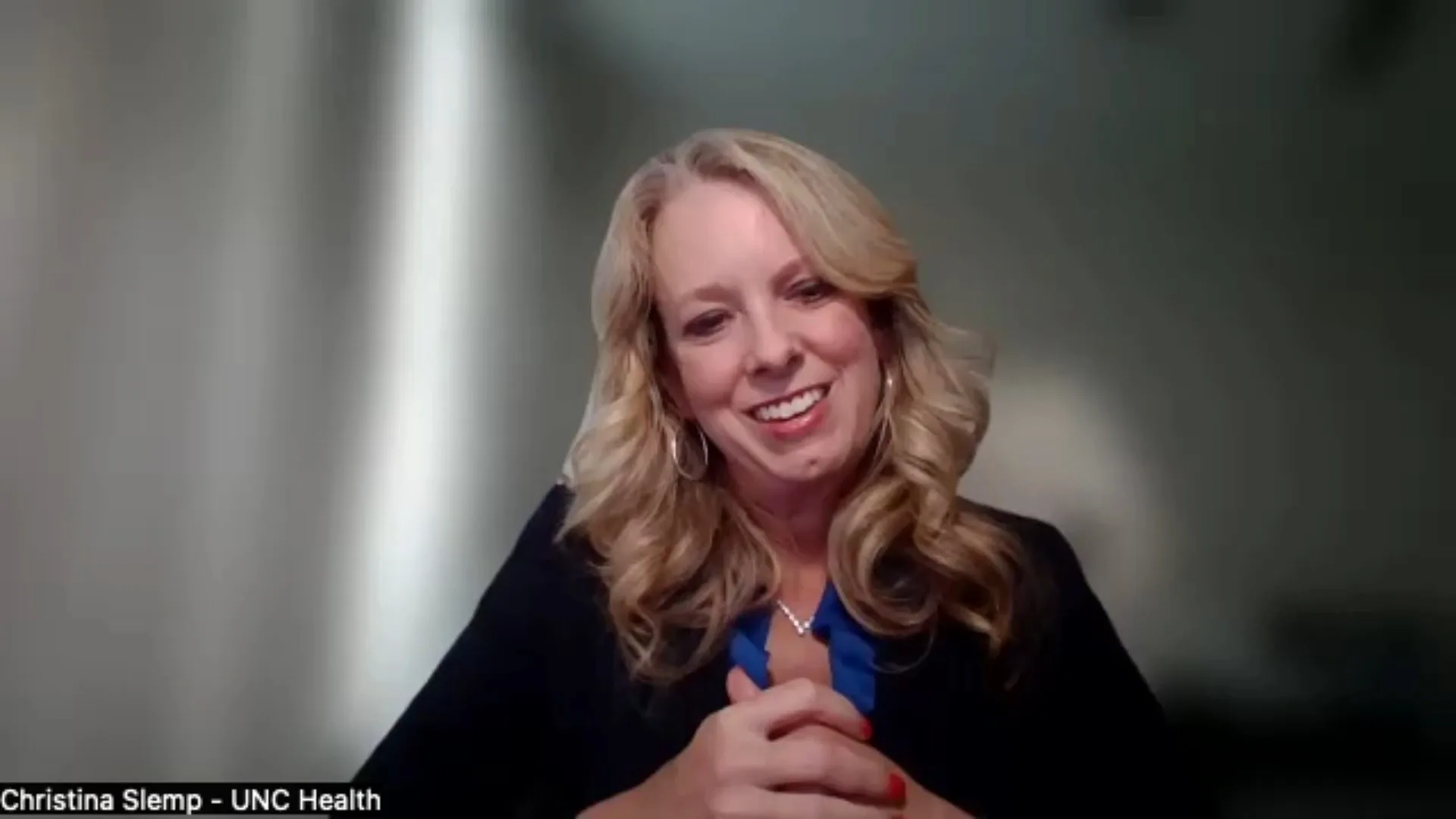
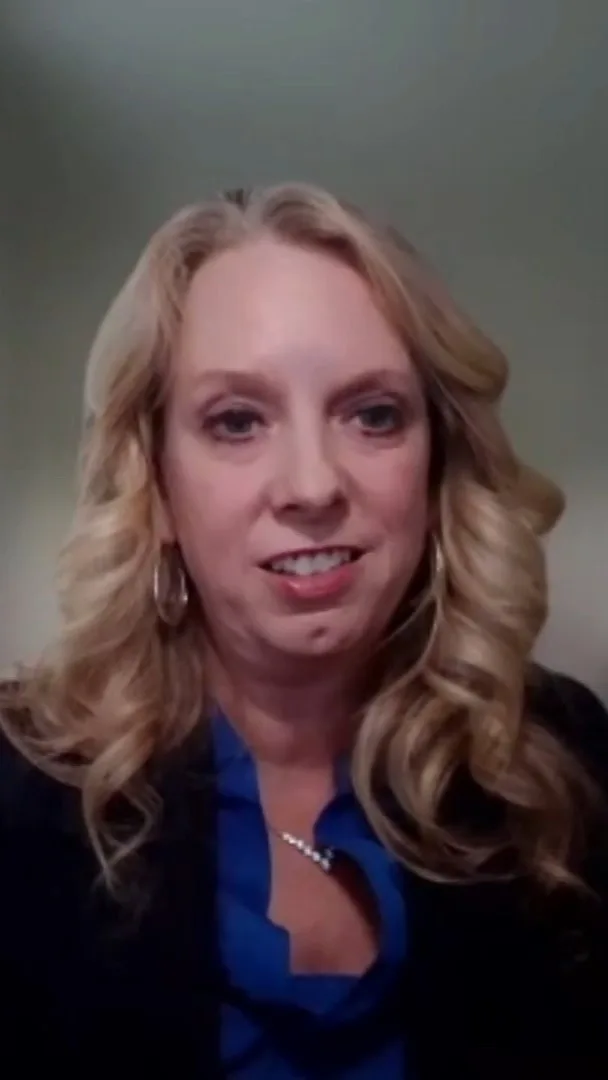
Guest: Christina Slemp, System Vice President of Revenue Cycle Financial Services, UNC Health Host: Praveen Chandran
Introduction and Revenue Cycle Leadership Journey Across UNC Health and Prior Organizations
Praveen Chandran: Welcome to another episode of Season 2 of the RC Executive Lounge podcast series. I am your host Praveen, and I am really glad you are all joining us for this episode today. Today's episode is going to be really exciting. Why? Because we are welcoming a guest whose career spans health plans, consulting, and system-wide revenue cycle leadership at one of the largest integrated health systems in the Southeast. Our guest is Christina Slemp, System Vice President of Revenue Cycle Financial Services at Chapel Hill, North Carolina-based UNC Health.
Christina joined UNC Health in June 2025 from Community Health Systems, where she served as Vice President of Revenue Cycle for over 13 years. She brings more than 25 years of leadership experience across hospital systems, health plans, payer contracting, and health information technology. She holds a dual master's degree in Healthcare Administration and Health Informatics from the University of Missouri-Columbia, and recently graduated with her Doctorate of Healthcare Administration from Oklahoma State University. She is also a very active member of the HFMA Revenue Cycle Executive Council.
What I find particularly compelling is Christina's combination of operational depth and strategic clarity. Shortly after stepping into her role, she began guiding UNC Health Patient Finance through a major restructuring that consolidated professional and hospital billing, with AI and automation central to a broader enterprise innovation strategy across the front, middle, and back of the revenue cycle. She has also been a vocal advocate for using AI in the provider-payer dynamic, including how revenue cycle leaders can use data and analytics to, in her own words, make payers come to the table during contract negotiations.
On the importance of communication in this work, Christina has offered a perspective that stands out: people get so data-driven that they just think everyone understands data. Different audiences absorb information differently, and if we do not take the time to connect the dots for them, we risk losing the impact. Our job is to make the data real, what it means, why it matters, and what action it should drive. We will talk today about her journey into system-level leadership, the change management work she has been involved with, and how she is thinking about AI and automation, the evolving provider-payer relationship, and the leadership lessons she has carried across more than two decades in healthcare. Now let's welcome Christina.
Christina, welcome to the show, and most importantly, thank you so much for joining us today.
Christina Slemp: Thank you for having me.
Denial Management Framework: Prevention, Prediction, and Six-Week Sprint Cycles
Praveen Chandran: Let's dive right in. Most organizations have claims denial management as a multi-year ongoing initiative. How does it work in your organization? And in general, given the breadth and depth of work to be done within claims denial management, how do you determine priorities for various line items in this program?
Christina Slemp: Well, I think when we talk about denials, it's intentional to be multi-year because payers are ever-changing, the landscape is ever-changing, there's always some sort of barrier in the way. But I think approaching denials from a multi-dimensional lens -- starting with prevention and prediction -- are probably the two most important things that any organization could do. From a strategic level, we focus on those larger initiatives: where are we seeing the biggest dollars, the biggest volume of denials, where we know the opportunity is most significant. But at the same time, how do we micro-target a particular physician not documenting a particular code that's coming through?
So you have to have that multi-layer approach. And we've recently implemented a six-week cadence on that microtargeted track. So we have these multi-year large ones, and I think everyone is dealing with medical necessity and authorization denials, but on those microtargeted ones, we're looking at a 90-day look-back and looking at any spikes in a particular denial code from a payer. Then we're going in and root-causing. We're kind of going old school -- we're using data, but we know those codes can mean a lot of different things. So we go through and have a subject matter expert root-causing each of those, and it's quick. Six weeks is quick when you talk about implementing a solution.
We're root-causing and then we're coming back and saying for a solution it's X, Y, and Z. Then we're presenting that into an executive committee. And that executive committee has our clinical, it has our revenue cycle, it has our financial, it has everyone from across our organization -- and that's where you get that cross-functional support and make sure everyone has a vested interest in your denial prevention. I think at face value everyone wants denial prevention to happen, but when it starts to impact their day-to-day, a lot of people don't always have the time. Because let's be honest, it's not just revenue cycle. Everyone in healthcare is juggling all the balls in the air trying to make sure something doesn't fall and hit the ground.
So really trying to make this as easy as we can and get those microtargeted initiatives moving. We started that, and every six weeks we're kicking off. We've got phase one going, phase two, phase three all simultaneously going and bringing those folks together. The goal would be that in six months we start to see some of those individual denials decrease. Now, are we going to see 2,000 denials decrease? Probably not. But when you think about revenue cycle and how much a person can work in a day, it could take the place of two FTEs. And we have a hard enough time hiring our FTEs now.
So those are two approaches. And then on the predictive side, we're trying to use AI, automation, and RPA on the prediction piece. And when we don't get it all there, we want to make sure that we have fail safes on the back end in patient finance. And that's where AI comes in on either producing the appeal for you. But I think where a lot of people miss the mark is where's the RPA in conjunction with the AI, because that's really where you're going to get your maximum benefit -- when you have the AI and the RPA together, and that is best practice for us.
A great example I have seen organizations do is having the automatic appeal for E&M downgrades, whether they come through as a true denial or an underpayment, and automatically generating that appeal letter -- but then putting the RPA or robotic agent on there to automatically upload it for you. And now we're getting to appeal things that we wouldn't have gotten to a year ago, two years ago, in some of our systems.
Praveen Chandran: Plenty of takeaways in what you said. The three that stood out to me were: one, six-week sprints; two, having RPA and AI together; and most importantly, using data to drive a lot of the decisions within the six-week sprints. That's a great segue to the next question.
Top Denial Drivers, Denial Rate Benchmarks, and Setting Realistic Success Targets
Praveen Chandran: Based on everything you have seen from data across organizations, what have been some of the top reasons driving denials? You get denials from payers across various different categories repeatedly across organizations. What are some of the themes in terms of priorities or reasons that are driving denials?
Christina Slemp: I think the ones we really can help with at the beginning is eligibility, right? Putting all the tools that we can to support our teams at the front desk. We know there is high turnover there, training is hard, but however we can make it easiest for the front end to get that eligibility right -- it's the number one impact we can make. Secondly, surgeries: what we authorized isn't what we did. Making sure that we have a process in place to identify that quickly, because a lot of times payers only give us 24 hours to update that authorization. And the third one is really a long-term challenge, and I'm not sure there's a clear solution: agreeing on what is medical necessity at the time of service. Agreeing on what the decisions are upfront, because once it makes it to the back end and the patient finance side, it's so much more difficult. So I think that's a more long-term strategic goal. But internally, any organization can tackle those first two relatively more quickly.
Praveen Chandran: Absolutely. And every organization is different, every payer is different. In your experience, what has been the range of denial rates you have seen across organizations? And what do you think is a realistic target to bring down denial rates for any organization using a combination of automation and operational changes working in tandem?
Christina Slemp: I think it's relative to where your baseline started. If you have a high denial rate, you obviously have a bigger opportunity. When your denial rate is already low, that makes it more difficult to decrease. Our organization is relatively low to begin with, so it's probably not going to have as big a bang as an organization where denials were a lot higher. For us, as we decide what to tackle, it's the impact -- it's not just money. It's how much time does it take to get it done. It may be low volume but high dollar, or it could be that we're not going to tackle it now because it requires too much manual process. We're going to try to do as much education as we can but we're not quite to the point to implement AI or RPA or things like that. So it becomes a multistrategy situation, and it's difficult to say because every organization is different from their baseline.
Praveen Chandran: Makes sense. For a program like this, given that it's a multi-year program, what do success targets look like in a given year? And when do you know that you're close to achieving your vision for this program?
Christina Slemp: I think that's very -- I'm going to say dicey for lack of a better word -- because whatever we started in, our strategies change. The vision changes. So for example, we could say that we want to decrease preventable denials by 30%. At the end of the day, our write-off may not ever change, but we're trying to get the operational touches out of the way so that we're not touching them. We could in fact decrease authorizations by 30%, but now we have a payer with bad behavior that increased our denials over here. So our strategy changes and our goals change and our vision changes. So I don't know that a three-year strategy to say that you're going to decrease your denials by 20% or 10% or whatever you choose in your organization is always realistic because the landscape is ever-changing.
The vision that we had a year ago when I started is still the same vision, but there's a lot more A, B, C, D, E that came into it. So we may have met our vision in certain areas that we targeted, but now we have new ones that came up and become our vision again. So we may be at baseline even though we did all this great work and met some amazing metrics -- but that doesn't mean our strategies were not successful.
Praveen Chandran: That totally makes sense. Thanks, Christina. That's a good segue to the next segment. Let's take a short break. When we come back, we're going to discuss a claims denial management initiative that Christina led her organization through.
Claims Denial Initiative: Cross-Functional Engagement, Underpayments, and Data Storytelling
Praveen Chandran: Welcome back, Christina. Let's dive into a recent claims denial management initiative that you led your organization through. Let's maybe start with what challenge you were solving for.
Christina Slemp: I think the challenge is money at the end of the day, right? Cash is king for most organizations. That's how we keep the doors open, how we buy the equipment, how we care for our patients. So how do we keep more money in, whether it is a true denial that comes through on a remittance or an underpayment? I think we're calling those denials that aren't really denials because they don't come through as denials -- trying to identify the underpayments. For us, it was trying to identify some of those underpayments that don't come through as denials. E&M levels are a great one -- some payers remit them as a denial, some don't. DRG downgrades just come through and you get the lower payment. So I think denials have really changed in terms of what a definition of denial is at the end of the day, and I think underpayments have become part of that.
What we found -- not just in our organization but I think in all organizations -- is that people love to work in silos, right? You have those personalities that love to own something and are really great at owning that one thing, but they don't venture outside of their vertical. And when you don't do that, then you're not fixing some of the root issues. We may have a great process on the patient finance side that fixes it, but we never fix the root issue at the beginning. So getting clinical people on board and getting the root causes resolved at the beginning is really where your impact is.
And how do you do that? It's networking. Relationships are everything. Coming into an organization -- I'm going to say I'm still new, I've only been there a year, so I still think I get to play the new card -- coming in and trying to get people to believe in what you believe in. And that's really key: I can throw data all day at them, but if they don't understand where it impacts them or how they impact the data, it doesn't do me any good. Really getting my team to understand that telling a story -- it's not about the data, it's about telling the story of what it has to say and how it impacts them. If we're trying to get a clinician to change the way they document, we've done a ton of one-on-one meetings with different groups within the organization. That sounds probably daunting because people say they don't have time. But if you don't get the core set engaged, you may make some initial impact, but long term people are not going to be engaged.
In this process, once you look at the data, you find the outlier -- what was the specific issue? Do we need to meet with the pharmacy department? Do we need to change the way Epic fires? Those are just some of the things we've been working on through this initiative. And it tackles other denials too: the particular denial or micro-denial we were working on actually spans across other denials that may not have hit yet. But because we fixed it here, we fixed it in the future for other denials that follow that same process and pattern.
In-House versus Vendor Decision, AI and RPA Integration, and Governance as a Safeguard
Praveen Chandran: Makes sense. And you talked about the six-week sprints where these kinds of initiatives get implemented. For these six-week sprints, how often has it been purely in-house versus how often have you relied on a vendor? And in general, can you walk our audience through your framework of how you decide on in-house versus vendor?
Christina Slemp: Sure. At the previous organization, we were looking to partner. I think everyone is looking at AI and utilizing AI in some form. We had the bandwidth to build it internally after meeting with lots of vendors. But something to keep in mind when you look at that is: how do you have the staffing to keep up with the market? Do you have the staffing to keep up with the changes? And if you don't, it's probably a great idea to find a great partner. And what do you look for in a great partner? Somebody that believes in your vision, somebody that is going to be flexible and understand what you want and need. And we've done that with our partner in the denial space.
What we didn't solve for in the beginning was the RPA. I can't say that enough: AI is great, RPA is great, but when you put them together, that's going to give you the best possible outcome. Now, the other thing we've run into -- and I'm sure many organizations do -- is the trust issue with AI. Trusting that the AI is right. Whatever you put into AI is what you're going to get out of AI. So if you have a bad process, it doesn't matter how good your vendor is -- if we fed them a bad process, it's going to be bad coming out of the gate. So it's very important that people understand the foundation matters. When you're evaluating whether it's a vendor or a process, you've got to make sure the process is where it needs to be first. Otherwise you're setting yourself and your vendor up to fail. But yes, look for a vendor that's going to believe in what you believe in, support what you believe in, and make changes as needed and be flexible with you.
Praveen Chandran: Makes sense. And let's talk about implementation. As your team went through implementation, were there any pitfalls, surprises, or lessons you learned that you'd like to share? We've also heard in some conversations that specifically for claims denial management, the EMR or EHR you're working with could make a big difference in what you can realistically implement.
Christina Slemp: I don't think it was necessarily a pitfall or surprise. I think trying to solve for 100% is sometimes the enemy of good. You have to really look at the risk-reward. Obviously compliance and regulatory requirements are number one, but falling into the pitfall of thinking you have to have it 100% -- when you think about manual work, there are still things that aren't 100% right even when we touch them ourselves. We do it to the best of our ability. Ensuring standardization is key.
The other pitfall organizations can fall into is around governance. They want to over-govern, or they treat governance as a bad word. Governance should never be a bad word. Governance should mean: this is to make sure that we're doing it compliantly, we're doing it correctly, and that we're doing it safely -- and that standardization will help us. It's a lot to go through in the beginning, but operationally it can feel like, why can't we just do A, B, and C? Governance is really important when we talk AI. These are people, these are patients' data, these are processes, these are claims going out the door -- and patients at the end of the day. So although it's not clinical in the revenue cycle sense, I think it's just as important that we keep it safe.
Praveen Chandran: And governance is one of those aspects where the more time you put in up front, the less you have to worry about during an audit. Otherwise it becomes a nightmare during an audit. Completely agree with you on that.
Measuring Success: Proactive Shift, Productivity Impact, and Key Revenue Cycle KPIs
Praveen Chandran: So for this kind of a program, what has been the measurable impact that you've seen either in this organization or in previous organizations? And how do you track success? It's obviously not just one metric -- there will be multiple metrics you and your team are tracking.
Christina Slemp: I think on the front end in our patient experience, we're seeing early wins and shifting from reactive to proactive. And I think organizations that do not shift to proactive will be the ones that are struggling in five years. If we look back the last 20 years, revenue cycle has always been reactive -- we've always been the fixer, the folks getting it back out the door. But again, relationships are important. When people start to see the wins and they start to see the importance, that gives them more support -- they're willing to support it more, they see the wins, they get excited about it.
We're also seeing improvements in productivity -- the less manual work. When we talk about AI and RPA in physician billing, that's volumes, right? It's not always dollars that are there, but the volumes are what kill our teams. Coming into one of our projects, teams are always worried about losing their jobs. I always get asked, how do you get people to not worry about that? We literally spent an entire town hall talking about here's everything we're not touching, here's everything we had to write off in the last year because we couldn't get to it. This is meant to support you and help you. And those productivity improvements were a game changer for some of our teams.
The way that we phrase it, the way we talk about it, the way that we implement it is always important in regard to change management. And then we do track a few things: denial rates, overturn rates, and more importantly, are we reducing avoidable denials and rework in the life cycle of a claim? That's really the goal. Our ultimate write-off may not change, but if we're reducing the touches and the manual effort, that's a win in and of itself. And I think some people forget that sometimes -- it's not always about the end number. Your number could always be the same. But if you went from 10 touches to two touches to get it, it's still a win.
Praveen Chandran: It is. It definitely is. Some very powerful insights. Thanks, Christina. With that, let's take a short break. When we come back, we're going to hear from Christina about her thoughts on up-and-coming technologies in the area of claims management. Please stay tuned.
Agentic AI in Claims Management: Predictive Denial Prevention and Emerging Payer Policy Analysis
Praveen Chandran: Welcome back. Let's dive right into up-and-coming technologies. Now when we go to HFMA, MGMA, or any healthcare conference, agentic AI is the buzzword. As an executive at your level, what role do you see agentic AI playing within claims denial management when you look ahead to the next 12 months versus the next three years and the next five years?
Christina Slemp: I think if you look back the last couple of years, it's been very task-oriented in regard to AI and RPA. And I think that's where we are going to have to go with pieces of the process -- we're going to have to connect all the dots. How do we use AI in every vertical from clinical all the way to the end and interconnect it? And I think organizations that do that are going to be the ones thriving in regard to AI. And we don't want to forget governance on the front end and making sure it's strong, because that will help us do that.
I also think some of our biggest opportunities are on the front end and in making things predictive. That's what we are really looking toward right now. We have all of these other structures in place for standardization and making sure we're consistent. But now I want to know: what do we think is going to deny, not what's going to deny after it does, but fix it before it goes out. So we can put claim edits in, those have always been there, but now: predictability of what's going to happen based on payer behavior and the way our claims have worked over the last 6 to 12 months. It's really less about replacing people, as I talked about, and more about giving teams a really intelligent partner -- let me help you work smarter and stay ahead of the problem so that you're not the hamster on the hamster wheel and you're not getting frustrated.
I hear so many times when I round with teams -- the payers if they would just, or front end if they would just register it right -- and at the end of the day there's always going to be an issue. But giving people the tools to feel like AI is a really good partner, I think, is going to be a huge win in healthcare. I really see it: in five years it's going to be where we were with automation 10 years ago, just part of our normal day-to-day. But I really do think for a lot of people it's scary, the thought of it and what it can do. There are still a lot of people who have not embraced it.
Praveen Chandran: Makes sense. And you talked about data and metrics at the beginning of the show, and you brought up some very interesting opportunities for using agentic AI in claims management. Combining the two together, there are going to be some that are incremental in nature and some that are like 2x, 3x, 5x in terms of impact. Are there areas within claims management where you think AI can truly change the nature of the game, not just incremental improvements but really 2x or 3x improvements?
Christina Slemp: I think so. When we talk about prevention -- when I talk about systems that have AI as a platform instead of just one vertical -- think about ambient listening on the clinical side. If I have ambient listening and I can trigger the documentation that's needed to get an authorization, then that authorization comes through and it's approved and nobody has to touch it after that. What an amazing thing that is, right? And I think the more people can see that in place, those are going to be the 5x incremental values we have. And nobody's going to change really how they do their business -- it's supposed to feel complementary. This isn't supposed to be daunting, this isn't supposed to make people take extra steps. This is really supposed to feel like a great technology partner and a support system. So I think where we can do that -- whether through authorizations, eligibility, ambient listening, or on the back end -- wouldn't it be great to have some AI platform in five years where we really had to touch 20% fewer claims?
Praveen Chandran: Makes sense, it totally makes sense. And with respect to claims denial management outside of agentic AI, are you or your team members exploring other technologies applicable to claims denial management?
Christina Slemp: I'm going to focus on agentic AI again. But I think where we haven't fully explored yet -- everyone went to AI for denials, right? It takes so long to go through all the records and connect all the dots, and are we going to use Milliman or InterQual? So that took a lot of attention. But I think where we haven't quite explored yet is AI and payer policies. Going out to the payers and analyzing policies, and then taking our data from the last 6 to 12 months, and saying: okay, for billing, this particular policy is going to cost you $600,000 if you don't change your billing practices or coding, here's the impact. And I know there's technology out there that's doing it through AI. We're in the beginning stages of evaluating that, but it's going back and looking at what is the impact of this particular policy change.
Many organizations still have two or three policy analysts trying to take the policy and then use data analytics to quantify the impact. But technology can do that for us now. And so that's where I think we should be going. It's still AI-driven. In five years we might have another hot topic other than AI -- like I said, 10 years ago it was RPA, now we're into AI -- but I still think that's what we're going to be focusing on in many organizations in the next five years.
Praveen Chandran: The example you brought up was very interesting, specifically for one reason: we have heard this complaint that when a payer changes a policy, often times the organization is so overwhelmed that they're not paying attention to that policy for at least 3 to 6 months after it is changed. What happens is they've lost a lot of money by then, and once all that lost money accumulates they start paying attention. They are shocked about how much that one policy change has had an impact on their RCM metrics. So your example hits the mark. Thank you for bringing that up. Let's take a short break. When we come back, we're going to talk about leadership challenges and navigating an organization through change management in the complex area of claims management. Stay tuned.
Leadership Metrics, Operational and Technology Team Tension, and Change Management
Praveen Chandran: Welcome back everyone. We are in the last segment of this episode, which is leadership challenges. Christina, before we jump into leadership challenges, is there a very specific claims-related metric or maybe two or three metrics that you and your immediate leadership team obsess over every day, the first one you look at every morning?
Christina Slemp: Well, cash is always first, but then that's a bigger issue -- you have to determine what goes into that. For me, every organization calls it something different, but Discharge Not Final Billed: anything that's holding and not going out the door really gives you a pulse on what departments it's holding for, where you need to push the button a little further. If you don't get that quickly, it can really get out of hand very fast. We've seen increases across healthcare when people are out, people are on vacation, we don't have someone covering for us, we have a three-day holiday -- all of those things. So we have to monitor that closely to make sure we're getting those claims out the door and getting the money back in the door. That's probably the number one thing I look at. There are other things -- we have four or five things every day -- but that's probably the biggest one that encompasses being able to identify if there's an issue somewhere.
Praveen Chandran: Makes sense. And you've led multiple organizations through claims management challenges. What are some of the biggest challenges faced by organizations who are looking to bring step-function improvement in reducing denials?
Christina Slemp: I think a lot of times it feels like it's people -- saying we don't have enough people, we don't have enough resources. But it's really communication. Change management is communication. Whether you are making an org chart change, a structure change, a claims change -- wherever you're trying to tackle it -- I'm going to go back to it being all about relationships and making sure that people feel comfortable enough to say things and to communicate when things are not going correctly, to help look for that goal and get to that goal.
Praveen Chandran: Makes sense. And almost every RCM leader we've talked to has touched upon this topic in some form or another, which is the tension between the technology team and the operations team. The operations team always has a bunch of requests to be implemented so that their life is made easy. And then the technology team wants to implement innovations -- risky bets that take time but can potentially bring step-function change. The operations requests may or may not be as innovative but they are the immediate need to keep things moving. How do you navigate this particular tension in your organization, and how do you build momentum for change when implementing claims-related changes keeping these two teams in mind?
Christina Slemp: I'm not going to say we figured it all out, but I've come from organizations where that relationship wasn't there. We worked in two very much different silos, and I think that happens in a lot of organizations. To the point you made about tension -- I will say currently we have a great relationship. And what's been so important as we've moved our verticals to front, middle, back at the current organization is that we move together as a team at our level. We have dedicated resources -- that's not always the case in systems for revenue cycle -- which makes a huge difference. So in that, there are only three of us that have to determine where our priorities are, versus an entire organization, because we have those dedicated resources. But we're looking at it just like you would anything: what's the impact, and how long does it take to get to the finish line? Sometimes the bigger impacts that take longer may take a backseat to some of the quick fixes we can put in.
And I think we have to come together as a leadership team, and trust comes with that. I have to have trust in my peers, I have to have trust in my ISD and my information team to make sure we all have the same goal in mind. I'm not going to say that we always agree, because I don't think that ever happens. But I do think we have a pretty good pulse together on what our end goal is. And I think I've said this the whole podcast -- relationships matter, and trust and relationships are the key to being able to make great moves together as a team and not work in silos.
Book Recommendation, Leadership Advice, and Trust as the Foundation of Lasting Change
Praveen Chandran: Makes sense. And as a leader who has navigated claims management challenges in multiple organizations, if there is one piece of advice that you could give to another RCM leader or maybe a CFO tackling denial management challenges in their organizations, what would it be?
Christina Slemp: I think obviously I'm a huge proponent of using data to tell your story and to be really clear on priorities and why you want something and why it's important. And I also think there should be a checklist: what's the priority, what's the impact, what's the productivity impact? It's not always financial, and it's not always productivity, but I want to make sure we're not implementing technology for the sake of implementing the new shiny toy. I'll give an example: at a previous organization, they wanted to automate something and the cost of automation was more than the FTE that was doing the work. And I think sometimes people lose sight of that. So making sure that as we move forward, we have the same shared vision. If that means we have a standard checklist as a guide, it goes back to governance. If you have the governance of what's going to guide us in the beginning, it's not a bad word -- it helps keep us focused on what we need to do and where we're going. And if we make every decision based on that, I have no data to back this up, but I feel like we could probably get 90% agreement on most things when we use that as a guide.
Praveen Chandran: That totally makes sense. One last question before we close the episode. Is there a recent book, a podcast, or a framework that has significantly influenced your leadership thinking in the last two years, especially when you look at the unique challenges you face as a leader in the claims denial management area?
Christina Slemp: I think younger Christina probably worked harder to try to get things done, and I think it's about taking a step back. When we talk about books, I think everyone should read this book -- I don't care if you're a man or a woman -- "Likable Badass" is really focused on women, but what it really enforces is a balance between being empathetic and building trust, while also being clear and decisive and willing to push for change and be supportive at the same time. And I think sometimes we forget that in our roles. Regardless of what role we're in, if we're in leadership, we forget that we can be clear, we can be concise, we can be accountable. I found that really relevant in the last year coming to a new organization. I came from an organization where I had been for a very long time, where my team would jump off a cliff with me if I told them -- they knew the parachute was going to open before we hit the ground. I wasn't necessarily expecting or had forgotten how hard it is to build that from scratch.
So I find books on influence really valuable, and I think people really need to take that to heart. Relationships matter, trust matters. And books like that help us better understand how to gain and build that trust and understand people -- and those skills are going to help us be more successful in the future. That sounds very soft, I know. But it's okay to be accountable, it's okay to be direct, it's okay to do all of these things -- but we also have to be empathetic. We also have to use guidelines to get us to that end goal. And that book is probably the most recent one I've read that felt really resonant, whether you're a man or a woman.
Praveen Chandran: I am super excited because we are closing the episode with what is arguably one of the most powerful insights of this episode. So thank you so much for closing with that thought. And of course, needless to say, this episode has had so many wonderful deep insights on claims management. I know our listeners will be walking away with a lot of lessons on claims management. Christina, thank you for joining the show today, and hopefully we can have you again sometime in the future. Thanks, Christina.
Christina Slemp: Yeah, thank you so much for having me. I think closing out with just one thought: at the end of the day, change doesn't stick because we tell people to. It does because people trust us. And so the whole episode is about building trust. If you want to change anything, it doesn't happen because you tell people to. It happens because people trust you.
Praveen Chandran: Again, very powerful insight. Thanks, Christina. Thank you.