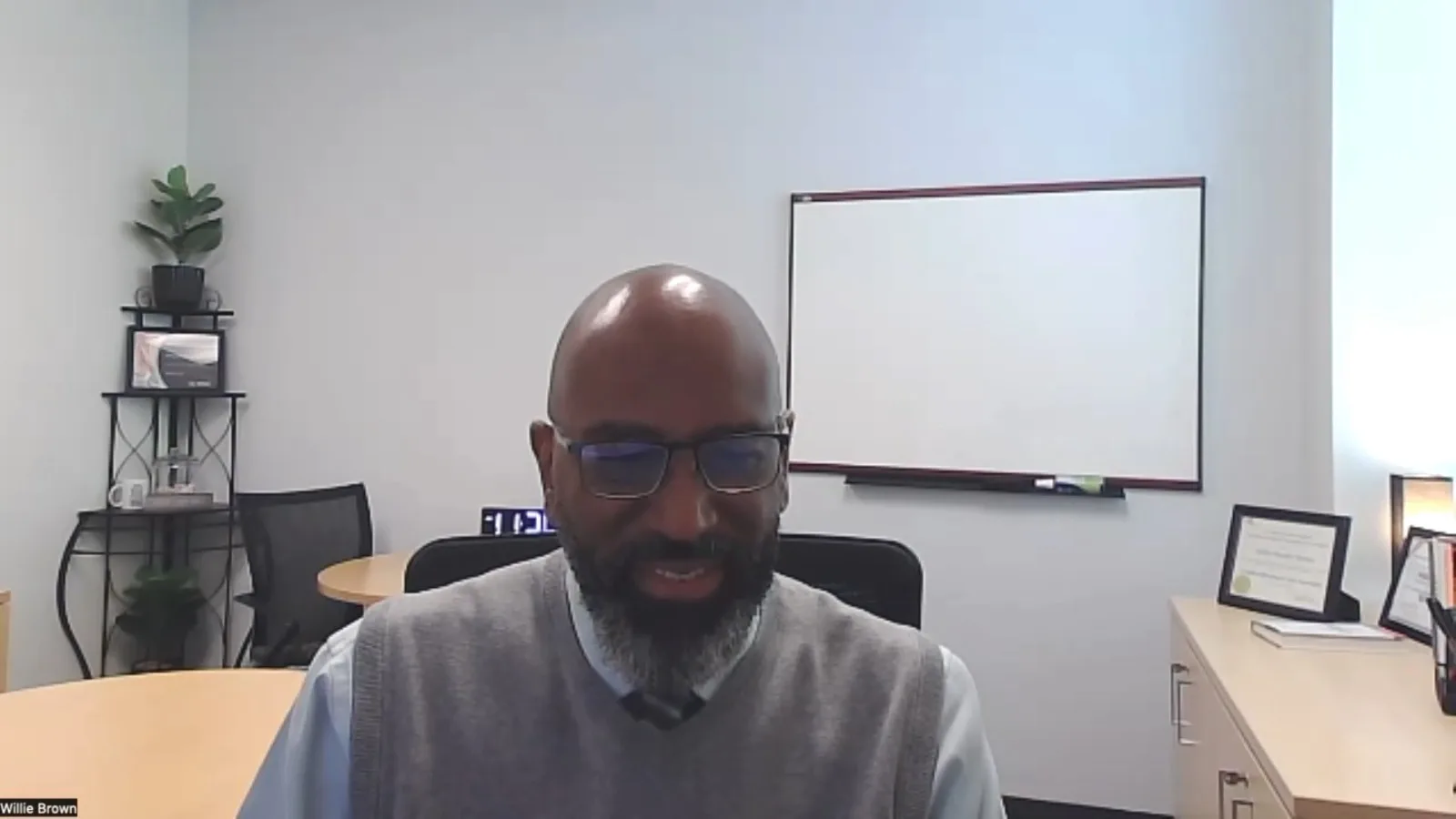
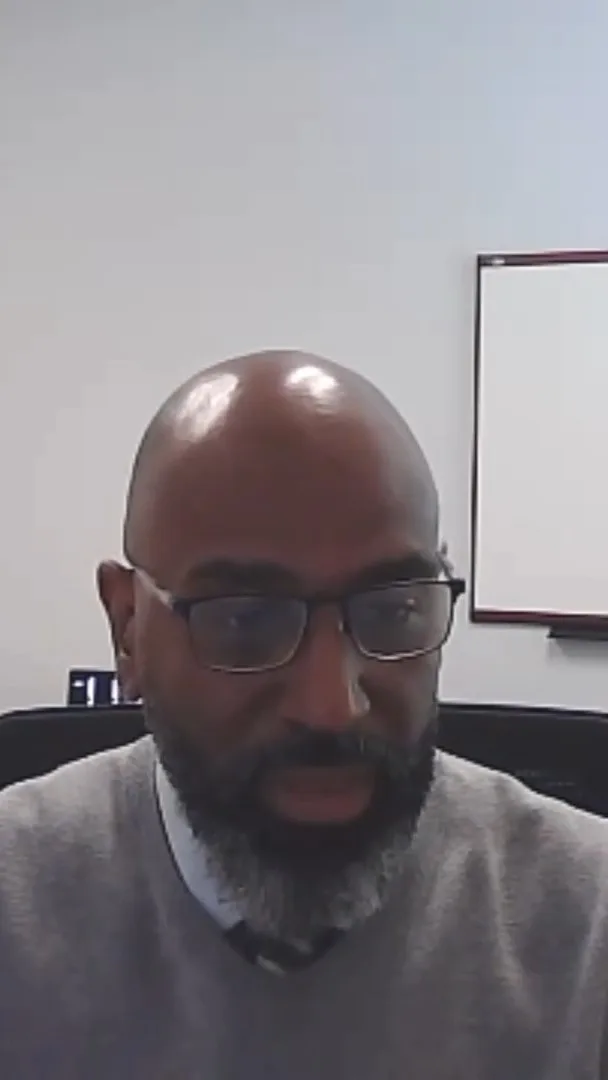
Guest: Willie Brown, Vice President of Revenue Cycle, Sentara Healthcare
Host: Praveen Chandran
Introduction and Revenue Cycle Leadership Background
Praveen Chandran
You're listening to The RC Executive Lounge podcast, the show where healthcare revenue leaders share real-world strategies, hard-earned lessons, and bold ideas shaping the future of revenue cycle.
Hi everyone, welcome to another episode in Season 2 of The RC Executive Lounge podcast series. I'm your host, Praveen, and I'm so excited you're all here today.
It's my pleasure to introduce Willie Brown, Vice President of Revenue Cycle at Sentara Healthcare. Willie is a seasoned executive leader in revenue cycle management, renowned for his strategic focus on people, process, and performance in the healthcare space. With a career spanning multiple leadership roles, Willie previously served as Director of Patient Financial Services at Prisma Health and as Vice President of Revenue Cycle at a regional medical center. He holds an MBA with a healthcare concentration from Bellevue University and brings strong credentials in physician relations, Medicare and Medicaid reimbursement, healthcare management, and corporate compliance. At Sentara, Willie leads the development and execution of policies and operational frameworks that drive revenue integrity, patient access, and financial performance across the system. He is also a recognized thought leader for tackling complex issues such as denial management, team morale, and measurement in revenue cycle operations.
We are very excited to have him here today to dive into his insights on how to build resilient revenue cycle teams, the evolving role of analytics and technology, and how to keep leadership people-first in a highly regulated, high-stakes environment. Willie, thank you so much for joining us today and welcome to the Lounge.
Willie Brown
Thank you. Happy to be here.
Setting Strategic Priorities Using ROI and Change Impact
Praveen Chandran
Finance and RCM teams are being asked to do more with less. Teams are short-staffed, and on top of that there are always pressures like payer delays, staffing gaps, and patient financing. Different RCM teams use different frameworks for setting their strategic priorities. Willie, could you walk us through your approach to setting strategic priorities when you look at the next twelve months and the next thirty-six months? The timing is perfect because we are exiting 2025 and entering 2026, so your framework could be really helpful for our audience.
Willie Brown
Sure. Well, first of all, I would say making sure that we are aligned with our strategic vision as an organization, our goals and initiatives, and then figuring out what kind of staffing or automation we need to successfully carry that out. We are always looking to reduce our administrative load as we take on new projects or do different things, and so we are always strategically looking at that and finding partners who can help with some of that work when needed. If we do not have the in-house resources, or it does not make sense to hire full-time staff, we try to connect with our vendor partners to make sure we can support the initiative without adding a tremendous amount of resources to our bottom line.
Praveen Chandran
And when you look at alignment with strategic vision, there are multiple areas to address. How do you determine which areas go first, which go next, and which areas you have to say no to?
Willie Brown
We always look at the ROI, the return on investment, when we think about an initiative. We also look at the amount of change and how difficult it is to make a transition. So we take those two things, the ROI, the change impact, and how many areas of focus are going to be affected by the change, and we bake those into our decision-making. Sometimes it also matters whether we have a leader internally who is excited about it and has the background and skill set to execute. We bake those things together and hopefully prioritize that initiative. And again, looking at our overall enterprise strategic vision and initiatives helps us prioritize the things we are trying to do in revenue cycle as well.
Denial Prevention, Patient Financing, and Financial Assistance
Praveen Chandran
That makes sense. There are three areas that we have heard many leaders mention are super important for an RCM environment, and these three areas come up at almost every major RCM event, whether HFMA, MGMA, or others. Those three areas are denial prevention, patient financing, and financial assistance. These three areas have a significant impact on cash on hand and days cash on hand. Where do these three topics fit into your strategic roadmap as you think about the next one year and the next three years?
Willie Brown
I will take the last one first. Patient financing and bad debt write-offs are probably top of mind as an organization. We are a not-for-profit organization, so the patient and customer are always top of mind for us. We start there, thinking about how we create system tools, processes, AI, and automation to support the patient financial experience. From there we build in processes to make sure we are taking care of our customers and that our patient-facing goals, initiatives, projects, and tools are active and usable. And from there, that drives everything we do. We also look at securing as much payment as we can from our commercial payers and our government payers. We certainly focus on denial prevention and denial management. We have a large team that works on that. It really resonates throughout our full revenue cycle. It is something we look at all the time, talk about all the time, and it drives most of what we do. The more denials we can prevent and the more we can collect from our payers, the better position we are in to take care of patients who may need a little or a lot of assistance depending on the situation.
Praveen Chandran
Especially when it comes to patient financing or financial assistance, there is always a dichotomy between relying on manual financial counselors to have the conversation versus automation. Where do you fall on that spectrum?
Willie Brown
We do mostly manual touch, but we certainly leverage automation. The way our financial counseling works is mostly post-service. We connect with our patients inpatient, outpatient, in our EDs, and also in our ambulatory clinics. We do some scoring for propensity to pay and financial ability to pay, so we are reaching out to those patients all the time and giving them information. We have all our financial assistance information on our website. We do some financial assistance by model, which means a patient does not necessarily have to fill out an application to receive financial support. That is how we approach it. We have a robust process, and it really is a push-pull type of situation. One of the things we do that I am really proud of is that once a financial counselor is assigned to an individual or family, that person keeps that case until we get the patient approved for support. And if for some reason they do not qualify for financial assistance, we have many tools, payment plans, and different options to support that customer and patient.
Vetting Initiatives and Finding Ways to Say Yes
Praveen Chandran
That is very exciting. When you look at the strategic priority decision process over the last one or two years, a leader at your level obviously has to make tough choices because your team will come up with phenomenal initiatives, but there will always be more than a team can handle. When making those tough choices, can you share an example from the last one or two years where you had to say no to a really good initiative in favor of something even more critical?
Willie Brown
I cannot really think of an initiative where we have had to say no. Part of what we do, as I talked about earlier, is we have a process where we evaluate ideas. Part of what we do as part of that idea-vetting process, by the time ideas get to my level, is we have vetted them to a degree that says there is a financial return, there is an impact on what we want to do, and it will support our strategic initiatives. I cannot think of anything where I have had to say no. Part of my vision and leadership style is to figure out a way to say yes. To your point, we cannot do everything we want to do, but I am blessed to have leaders who bring really good ideas to me. And with those ideas, they bring ways that we can execute and benefit the organization.
Praveen Chandran
So it sounds like your next-level leaders do really good filtering in terms of which initiatives have the highest ROI and bring the right ones to you, which makes it easier for you to say yes. That is a great insight. Willie, thank you so much. With that, let us take a short break. When we come back, we are going to dive into a recent initiative that Willie's team led, what challenges they were solving for, and how they went about implementing the solution. Stay tuned.
Charge Reconciliation Case Study and the Build-Versus-Buy Decision
Praveen Chandran
Welcome back, everyone. Willie, let us dive into a recent initiative that you and your team led. What challenge were you solving for?
Willie Brown
We wanted to get to a place as an organization where we were doing charge reconciliation in a more robust and consistent way. There are vendors in the market that can help with that. They can grab all of your charges, put them in a dashboard, and have your team, from a revenue integrity standpoint, review those charges and partner with the charging departments and leaders there to identify charge leakage, charge variances, and similar issues. In order to approach that, we decided to build that tool internally, based on our shared knowledge of tools in the market and things we have used before. We partnered with our IT team and our data analytics team to build our own dashboard for charge reconciliation. We have been in development with that tool for about six months and we finally have it at a point where we are taking it to production. That makes it much easier for our charge reconciliation and revenue integrity analysts to identify trends and then quickly pivot and partner with leadership or department leaders to identify where things went wrong and how to repair that issue. We also identify new charges we were not aware of, places where something stopped being charged when it should have been, and opportunities to improve our overall charge capture rate.
Praveen Chandran
Sounds very exciting. When you thought about this problem and this challenge, what was your framework for doing it internally versus selecting a partner or vendor to solve it?
Willie Brown
We had a lot of conversations around what it would look like to bring a vendor in and what the cost would be. As we had those conversations internally with my leadership and my team, our IT partners pointed out that we are in development of some AI and automation tools that we are building rather than buying. They asked whether there was an opportunity to save some cost, because it takes a very long time to onboard a vendor, going through all of the challenges with IT infrastructure and security and those things. As we look forward, we want to always take an opportunity to save where we can, because that protects jobs and puts us in a position to really serve our customers. That was the framework around it. The idea came up in what I call a revenue integrity steering committee that I lead. Part of what I ask that steering committee to do is guide us, give us ideas, and help us think through things that are challenging for the organization. Out of that process, we came up with the idea that maybe we could build this internally, and we set out on a path to do so.
Praveen Chandran
That makes sense. And it sounds like it is again an ROI-based decision where there could be cost savings by implementing it internally and maintaining it in the long term. Thank you.
Implementation Lessons and Measuring Impact
Praveen Chandran
Let us talk about the implementation for this project. As you went through implementation over the six-month period you mentioned, were there any pitfalls, surprises, or lessons that you did not anticipate ahead of time?
Willie Brown
Not really anything we did not anticipate, but certainly some things we needed to consider. From experience, I know that when you roll out a charge reconciliation tool or enhance your charge reconciliation process, you are really asking your clinical leaders, people who take care of patients, to be engaged, to be involved, and to take time away from their day-to-day duties to help you solve this problem. Part of what we set out to do with the tool is to make it very simple, very easy, and not labor-intensive for our clinical leaders. We wanted to be able to go to them with an already-identified issue or concern and say, "We just need to run this past you, get your input, validate that this is what we are seeing, and bring solutions rather than problems." One of the things we wanted to avoid was asking clinical leaders to spend multiple hours a day doing charge reconciliation. While we put some accountability on them to help us, we did not want to challenge them to really step outside of what they do every day to solve this problem. The tool meets us where we need to be as an organization. Our system is very complex, with a lot of charges running through it, and the tool helps make it somewhat simpler and less labor-intensive to identify those opportunities for increased charge capture.
Praveen Chandran
That makes sense. As you look at this project, what has been, or what is expected to be, the measurable impact from this tool?
Willie Brown
We look at our charge lag every day. We also look at our overall gross revenue and we are going to monitor our net revenue from those gross revenue increases. We are also monitoring denials, because sometimes charges we miss cause a claim denial for additional documentation or a coding error. We can also look at our coding rates. If we get all those charges up front, maybe that is an account the coder does not have to touch as extensively. It goes through our edits and is out the door to the payer. Or maybe the coder still has to touch it because of the complexity, but they do not now have to scrub the chart for charges to make sure everything is on the claim and ready to go. All they need to do is put their final touches on it. So we are hoping to increase revenue, both gross and net. We also hope to decrease denials over time and improve our overall productivity. We are going to monitor productivity for our coders and our charge reconciliation analysts because when you are doing it manually, they spend a lot of time in work queues adding charges, reconciling charges, and doing resolution work. If we can get those charges added up front, over time we are going to improve productivity and potentially even decrease our labor cost a little bit.
Praveen Chandran
A very powerful tool indeed. It hits multiple metrics, everything from revenue to productivity to cost savings. Amazing. With that, let us take a short break. When we come back, we are going to listen to Willie's perspective on up-and-coming technologies impacting RCM as well as broader healthcare in general. Stay tuned.
Agentic AI in Authorization Management and Denial Prevention
Praveen Chandran
Welcome back, everyone. Thanks for staying with us. Willie, I want to shift gears into technology. Agentic AI is the buzzword in the industry right now. What role do you see, as a leader at your level, agentic AI playing in revenue cycle either this year or looking at the next three to five years ahead?
Willie Brown
I think it is going to play a pivotal part in what we are trying to do as a system and as a healthcare industry. The number of people working in revenue cycle is decreasing over time, so we have to figure out a way to supplement that need for resources. AI overall is going to help us with some of that. It is also going to give new career opportunities for people who maybe have not considered revenue cycle before. Overall, we have to figure out how to save costs while pursuing payments from payers and patients, because it is becoming more and more cost-prohibitive. Agentic AI is going to help us do more of that at a quicker rate and also help us learn things from the data that we do not know today and take advantage of over time.
Praveen Chandran
Any such technology typically has two aspects: incremental improvements that take us somewhere versus five-times or ten-times real transformation. Are there areas within RCM or broader healthcare where you think AI or agentic AI could bring real, transformational change?
Willie Brown
For sure. I think everybody is talking about authorization denials. We are doing some work there with automation and AI to connect with payers electronically, identify cases that do not require an authorization versus those that do, and quickly pivot into those. As payers hire third-party vendors to process authorization denials, it is a very labor-intensive task to know what needs to be authorized, work through that process to get a procedure or test or stay authorized, and then follow up on statuses to move quickly. You can do it manually and do it very well, but the question you have to ask is how long it will take and how labor-intensive it is. That is an area that is really moving us forward. Payers are already using that technology to evaluate authorization requests, so as a healthcare delivery industry we have to get to a place where we are able to navigate through that. That is one area a lot of organizations are working on. Denial management overall and documentation queries through agentic AI are also areas of focus. The automation we are using for authorization is not just about connecting with the payer and confirming we have an authorization on file, but also grabbing the detail from the EMR that we need to send forward and documenting for peer-to-peer reviews and other steps to move authorizations and denials through the process. Most organizations would say authorization denial is something they wish they could improve, and we are no exception to that. It is certainly something we are working through with AI and automation.
Emerging Technology and Registration Quality Assurance
Praveen Chandran
That is great. Are there other areas outside of AI or agentic AI that you and your team are actively exploring in terms of technologies that could be impactful for RCM or healthcare in general?
Willie Brown
Sure. In addition to our charge reconciliation tool, we are developing a registration quality assurance tool internally. Again, there are tools in the market, but we are using AI to identify the most common errors that we either make through our registration staff or that our tools, our EMR, and our eligibility tool are not capturing for whatever reason. We are backing into it through denials. We also have work queues where we identify those typical errors. What we want to do is get to a point where we educate team members in real time on the things they need to change or correct so that an account does not stop in our system or leave our system, go to the payer, and ultimately cause a denial. This is something our team members have asked for. Registration is very complex and we ask our registrars to do a lot: managing patients, answering phone calls, trying to collect point-of-service payments, and many other things. We are also asking them to create an accurate and complete registration. The resources are not growing on trees, so we have to figure out a way to better supplement and support them. We are developing that tool and getting very close to building it out with the data we have, so that we can better support our leaders and our team in real time.
Praveen Chandran
Willie, a great set of insights on up-and-coming technologies. Thank you so much. Let us take a short break. When we come back, we are going to listen to Willie's insights on leadership challenges in complex RCM environments. Please stay tuned.
Change Leadership and Building Momentum
Praveen Chandran
Welcome back, everyone. We are in the last segment of this podcast episode. We are going to listen to Willie's insights on leadership challenges in RCM environments. Willie, you talked about an initiative that took six months and involved many leaders from cross-functional teams, and how this project could be impacting them in terms of charge reconciliation. The underlying theme here is that change is hard, especially in complex RCM environments. In such cases, how do you build momentum for change within your team as well as with cross-functional teams when you are leading such an initiative?
Willie Brown
As I talked about before, the first thing I try to do is set clear guidelines around the initiative and what the ROI is and why we are doing it. Really establish the why. What I have learned is that when people understand the why and have an opportunity to ask questions, you get better buy-in. For those people who may be a little more skeptical about the change, you establish change champions, which is what I like to call it. There are certainly ways you can get people to do the things we need to do to move forward. But as a leader, I think it works better when I can encourage and engage their peers and colleagues to get on board and help them come along. I try to do a really good job of overcommunicating the why, the ROI, and the reason we are doing what we are doing, and then making sure I am engaged and supportive. The worst thing you can do as a leader is say we are doing this and then leave the room and never check back in. If we are doing it, we are doing it together. I am checking in often, asking questions, and making sure the team feels supported. This is our initiative, our goal, our project, not yours. We share in the difficulty of executing and we share in the celebration when we succeed. I am always at the table, and it is really important to me, regardless of how many people I have reporting to me or how busy I get, to check in on the things I see as important. If you as a leader do not check in on the things you consider important, people tend to start thinking those things are not really important to you.
Change Champions, Leadership Advice, and Closing Reflections
Praveen Chandran
That makes sense. Could you drill down a little on a very interesting topic you mentioned, change champions? Maybe you can throw a little more light on how you utilize this concept in your organization.
Willie Brown
Happy to. A change champion in my mind is a term used in the market, but I have also made it a little more specific to what we do. Basically, if we come up with an idea, one of the first things I try to do is challenge my leaders and the leaders they lead and say, "Who wants to lead this?" Invariably I find that there is a particular person or group of people who are excited about it and have a personal connection to it in some way. Maybe it is their career path, something they have been educated on, or something they are passionate about because they have a family member or themselves in a situation where they see this as something that will improve that experience. Part of what that change champion does is, even if they are not at a leadership position yet where they can lead it, they are certainly at a position where they can be a pivotal part of this. If they are a leader and they have the position, wherewithal, and bandwidth to lead it, I ask them to lead the project, pull people along, and establish those relationships. Those change champions really help me communicate the vision and the execution of it. Along the way, they get an opportunity to grow, learn, and see different things, so it is an opportunity for career growth and a feather in their cap for something that was successful. I do not ever want to take sole credit or blame for something that was successful. We share it all as a team. It has really been beneficial in my career to have those change champions alongside me. Sometimes they also help you see blind spots, things that maybe you are not thinking about as an executive or senior leader. And the last thing I will say is that sometimes people will bring concerns to a change champion that they will not bring to you as a leader because they do not want to be seen as negative. That person can take that information and boil it down to something actionable, so everyone feels heard in a way they might not if you are always in the room driving the initiative.
Praveen Chandran
Willie, change champions is such a powerful insight for our audience today. The fact that they have buy-in from the get-go means they will permeate the change throughout the organization in favor of the initiative. Such a powerful insight. Thanks, Willie.
You have been in RCM for a very long time, especially in leadership roles. If you were to give one piece of advice to another RCM leader or a finance leader tackling similar challenges, what would it be?
Willie Brown
I would say check your biases and your feelings at the door. Be open to feedback from both your leaders and the leaders you lead. Really just have an open door. Say you have an open-door policy and actually have an open-door policy. That enables your team and the people you lead to give you real feedback on your behavior and your execution. It creates and fosters a level of accountability throughout your leadership team and the people that you lead by opening that door, really asking clarifying questions, and sometimes putting yourself out there to say, "I do not know this, or I need some help with this idea or project or initiative." People really step in in those situations because they see their leader as part of the team rather than someone who sits outside of the team.
Praveen Chandran
Essentially an open-door policy that brings feedback easily to the leader so that the leader can assimilate and act on it. Again a very powerful insight. Thank you so much, Willie. With that, the last question for the day.
Is there a recent book, a podcast, a framework, or a video, even something on Netflix or Amazon Prime, that has significantly influenced your leadership thinking over the last year or so?
Willie Brown
Not one thing individually. I am always looking for ways that other leaders are leading. I take a lot of feedback from my team members and the people that I lead. Over time I have developed tools and techniques and learned from other leaders. I would say my leadership comes from my connections, the people I lean on for advice. I have a lot of connections and I am not opposed to picking up the phone and calling a colleague inside or outside the organization and saying, "I am struggling with this, or I have an idea I want to try. Have you done this? What are your thoughts on it?" I think my connections with other individuals and other leaders is probably where I learn most of the things I am talking about here. Some of those are ideas for things I did not think about on my own. I will give you one quick example. I do check-ins with all of our managers and leaders, and I ask all of my leaders to do sixty-day check-ins with new team members. I do that because I have learned that sometimes new team members and new leaders are not settling in well or do not have all the tools they need to be successful. I do not take that for granted. We check in and make sure that is true. When we find it is not, we solve for that. That is something I learned in my career: sometimes people do not have what they need, and you think they do. As a leader, we need to validate that and if not, remedy it as soon as we can.
Praveen Chandran
Thanks, Willie. With that we are at the end of today's episode. Willie, thank you so much for sharing some wonderful insights today. You have given our listeners a lot to take away from this episode. Thank you so much.
Willie Brown
Happy to do it. Thank you for having me.